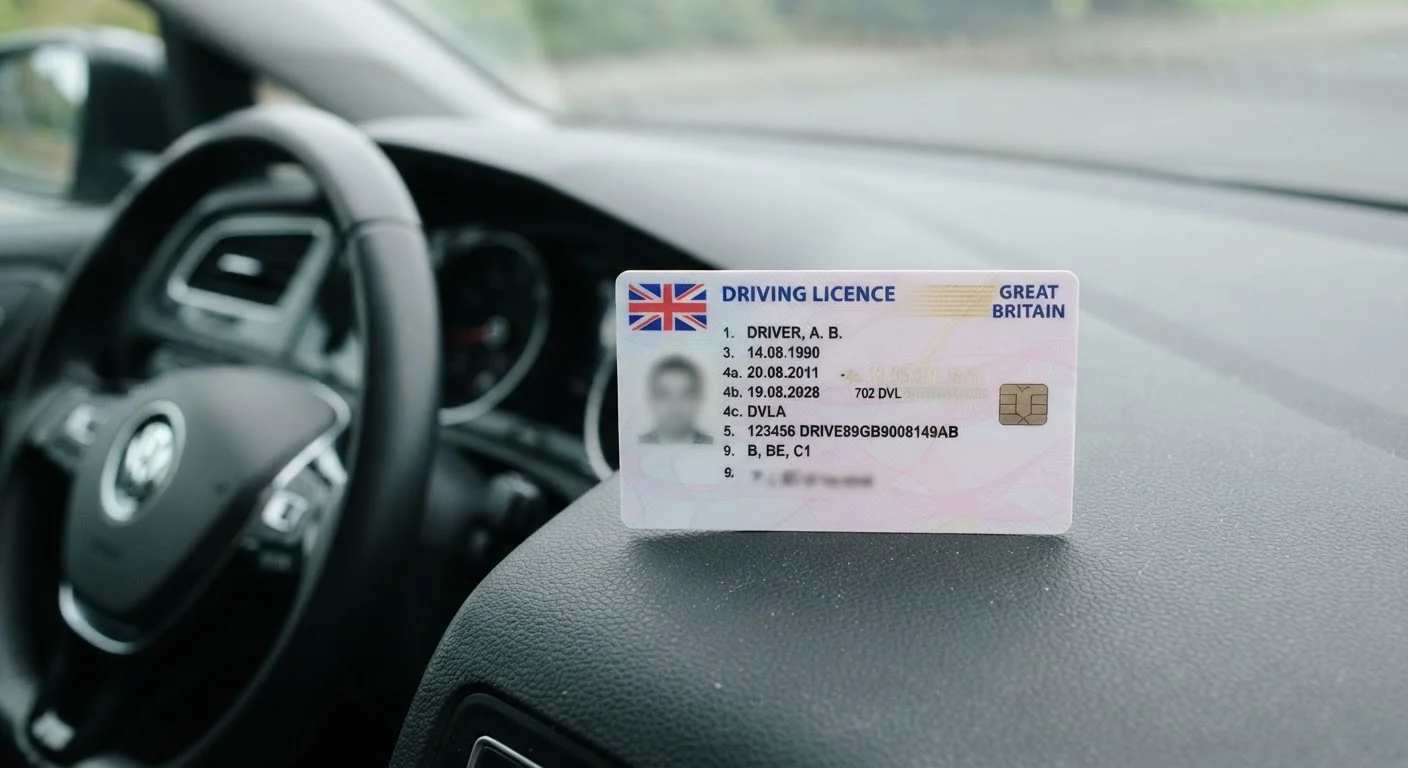


How Points Are Added to Your Licence
When you commit a endorsable road traffic offence, a court or - for fixed-penalty offences - a police officer can add penalty points to your DVLA record. Each offence code carries a fixed range or exact number of points. Common examples include:
- SP30 (speeding on a public road): 3-6 points
- CU80 (mobile phone while driving): 6 points
- DR10 (drink-driving): 3-11 points
- IN10 (using a vehicle without insurance): 6-8 points
For offences dealt with via a fixed penalty notice - a roadside or postal notice - you typically accept the points without going to court. For more serious offences, a court decides both the penalty and the number of points within the prescribed range. You are not required to surrender your physical licence in most cases; the endorsement is recorded centrally by the DVLA.
Fixed Penalty vs. Court-Decided Points
Not all offences give you the choice to accept a fixed penalty. Some offences - such as dangerous driving - must go to court. Others, like speeding, may be dealt with via a fixed penalty notice or a speed awareness course where eligible. A speed awareness course, if offered and completed, means no points are added - but you can only attend one within any three-year period.
How Long Points Last - and When They 'Count'
Points have two distinct time periods that are easy to confuse:
- The period they remain on your licence - four years for most offences; eleven years for serious offences such as drink-driving or causing death by dangerous driving.
- The period they count toward totting up - typically three years from the date of conviction for most offences.
This means a speeding endorsement might be visible on your record for four years, but it only counts toward the 12-point disqualification threshold for three of those years. After three years it becomes 'inactive' but is still disclosed to insurers until it falls off entirely.
12
Points that trigger mandatory disqualification
Under the UK totting up rule, accumulating 12 or more active points generally results in a minimum six-month driving ban imposed by a magistrates' court.
6
Points that revoke a new driver's licence
Under the New Drivers Act, drivers within two years of passing their test lose their licence at just 6 points - half the standard threshold.
4 years
Standard time points remain on your licence
Most penalty point endorsements are visible on your DVLA record for four years from the date of the offence, though they typically count toward totting up for three years.
Understanding exactly when your points become inactive is important when you renew your insurance - always check your current record rather than relying on memory. The DVLA's online checking service gives you a real-time view of your record.
The Totting Up Rule and Disqualification
The 'totting up' rule is straightforward in principle: accumulate 12 or more active penalty points, and a court must impose a disqualification - typically a minimum of six months. If you have been disqualified within the previous three years, the minimum rises to one year; a second prior disqualification pushes it to two years.
Disqualification is not automatic - it happens when the case reaches a court. At that point, you can argue 'exceptional hardship' (for example, that losing your licence would result in job loss affecting dependants). Courts apply this exception cautiously, and it cannot be used more than once every three years for the same reason.
Once disqualified, you must surrender your licence to the court. After serving the ban you can apply to the DVLA to have it returned, and in some cases you may be required to resit your driving test.
New Drivers: A Stricter Standard
Drivers who passed their test within the past two years are subject to the New Drivers Act. Under this legislation, just six points - half the standard threshold - triggers an automatic licence revocation. Unlike a normal disqualification, revocation means returning to provisional-licence status: you must pass both the theory and practical driving tests again before driving unsupervised.
This stricter rule reflects the higher crash risk associated with newly qualified drivers. It applies to all new drivers regardless of age. The two-year probationary period runs from the date you passed your practical test, not from when you received your full licence in the post.
For a broader look at the conditions attached to different licence categories, see our guide to driving licence categories. Building good habits early also reduces the risk of accumulating points - safe motorway technique is one area where new drivers commonly need guidance: motorway driving for the first time.
Points and Your Insurance
Penalty points must be disclosed to your insurer when you take out or renew a policy - failing to do so can invalidate your cover. Insurers treat endorsements as a risk signal, and premiums typically rise. The size of the increase depends on the offence, the total number of points, your driving history, and how each insurer weighs risk internally.
Points for serious offences (drink-driving, dangerous driving) tend to produce larger premium increases and may make it harder to obtain cover through standard insurers. Points become less influential on your premium as they age and eventually fall off your record entirely.
There is no universal formula - two drivers with identical points can receive very different quotes from the same insurer depending on other factors such as age, vehicle, and location. Transparency with insurers is both a legal obligation and in your long-term interest; policies obtained through non-disclosure can be cancelled or voided at the worst possible moment.
This article provides general information about the UK penalty points system and is not legal or insurance advice. For guidance specific to your situation, consult a qualified solicitor or regulated insurance adviser.