
Why Tyre Maintenance Pays Off
Tyres are your vehicle's only contact with the road, yet they rank among the most neglected maintenance items for everyday drivers. Keeping them in good shape isn't just a safety matter - it directly affects fuel economy, handling, and how long each tyre lasts before needing replacement.
A tyre running at the correct pressure rolls with less resistance, meaning your engine works less hard and fuel goes further. Proper tread depth provides the grip needed to brake safely in wet conditions. These aren't marginal differences: the National Highway Traffic Safety Administration (NHTSA) estimates that tyre-related failures contribute to tens of thousands of crashes each year in the US.
For cost-savvy drivers, the math is simple - spending a few minutes on tyre checks regularly is far cheaper than replacing a set of tyres early or dealing with the aftermath of a blowout. This guide walks through every dimension of tyre care, from pressure to retirement, so you can make informed decisions without relying on a shop visit every time.
Keep a Gauge in the Glove Box
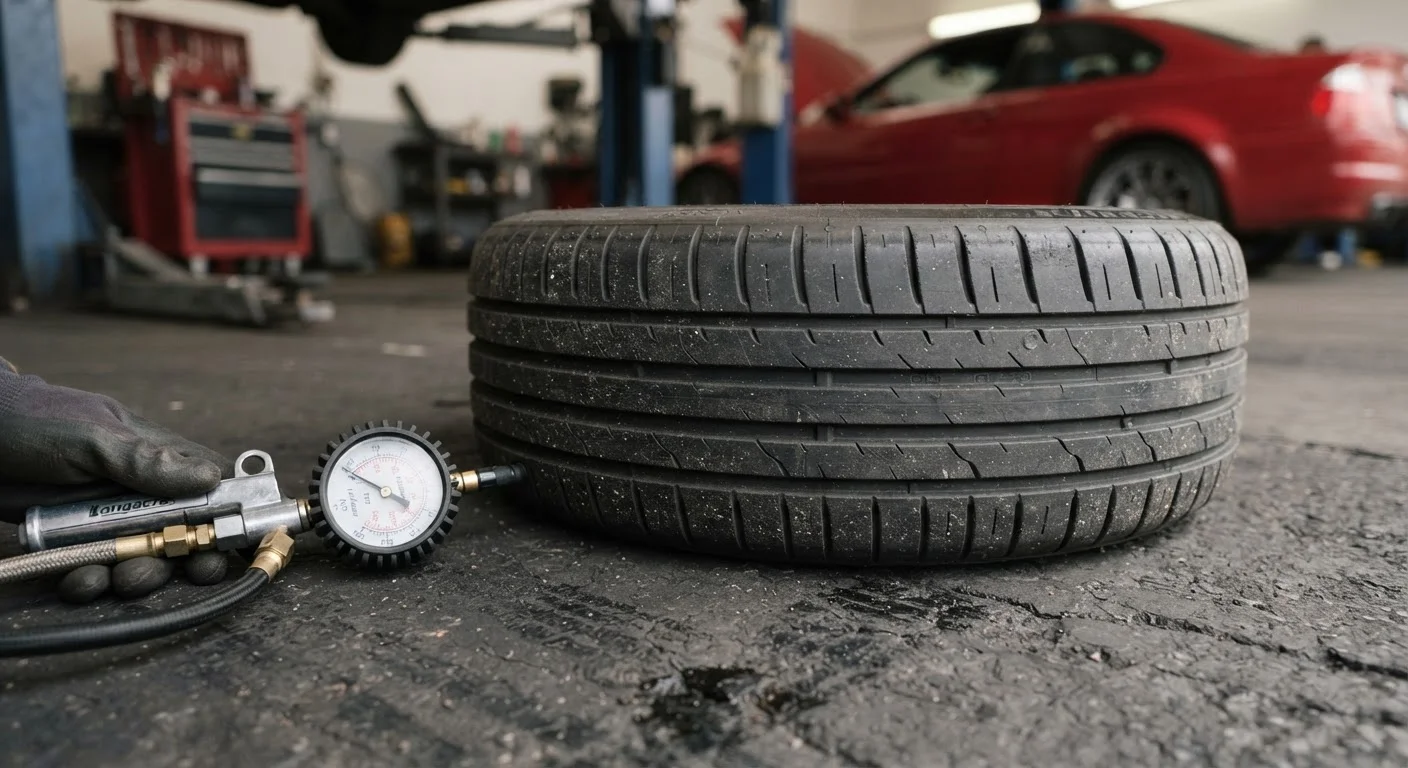
A basic analogue tyre pressure gauge is accurate, battery-free, and costs under $10. Relying solely on the TPMS warning light means driving under-inflated for longer than necessary. Make it a habit to check pressure on the first day of each month.
Tyre Pressure: The Number That Matters Most
Tyre pressure is measured in PSI (pounds per square inch). The correct figure for your vehicle is printed on a sticker inside the driver's door jamb - not on the tyre sidewall, which lists the maximum pressure the tyre can hold, not the recommended operating pressure.
Check pressure when the tyre is cold - meaning the car has sat for at least three hours or hasn't been driven more than a mile. Heat from driving temporarily raises pressure readings. A quality dial or digital gauge costs only a few dollars and is a worthwhile addition to any glove box.
~1 PSI
Pressure lost per 10°F temperature drop
A well-established relationship between ambient temperature and tyre inflation, cited by NHTSA and tyre manufacturers.
4/32"
Recommended tread replacement threshold
Widely cited by tyre safety organizations as the practical safety threshold, well above the 2/32" legal minimum.
6 years
Age at which professional inspection is advised
Recommended by the US Tire Manufacturers Association, regardless of remaining visible tread.
Temperature swings matter more than most drivers realise. Tyre pressure drops roughly 1 PSI for every 10°F decrease in ambient temperature, which is why autumn is a common time for dashboard low-pressure warning lights to appear. The seasonal maintenance guide covers this in the context of broader cold-weather preparation.
If your vehicle has a TPMS (Tyre Pressure Monitoring System), understand that it typically triggers a warning only when pressure drops 25% below the recommended level - well past the point where handling and fuel economy have already suffered. Manual monthly checks remain the reliable standard.
Reading and Measuring Tread Depth
Tread depth is measured in 32nds of an inch. New tyres typically start at 10/32" to 11/32". In the US, the legal minimum is 2/32", but stopping distances in wet conditions increase significantly well before you reach that point. Many tyre and safety organizations recommend replacing tyres at 4/32" as a practical safety threshold.
The quickest field test is the quarter test: insert a US quarter into a tread groove with Washington's head pointing down. If the top of his head is visible, tread depth is at or below 4/32" - time to plan for replacement. The older penny test uses Lincoln's head to indicate 2/32", the legal minimum.
Look for uneven wear patterns across the tyre surface. Wear concentrated in the center suggests chronic over-inflation; wear along both outer edges points to consistent under-inflation; wear on one edge only usually indicates an alignment or suspension problem. These patterns tell you about a problem beyond the tyre itself - one worth diagnosing before fitting new rubber.
When buying a used car, locate the four-digit DOT date code on each tyre's sidewall before agreeing to a price. Old tyres - even ones with decent tread - may need immediate replacement, and that cost should factor into your negotiation.
Tyre age is a common blind spot in used-car evaluations. Rubber can degrade internally without obvious visible signs, making a date check essential for safety and cost planning.
Rotate your tyres at every other oil change to build the habit without needing a separate reminder. If your shop performs the oil change, ask them to rotate at the same visit - it adds minimal time.
Irregular or skipped rotations are one of the leading causes of premature, uneven tyre wear. Bundling the service with an existing appointment removes the friction that leads to it being forgotten.
Rotation and Alignment Explained
Tyre rotation means moving each tyre to a different position on the vehicle on a regular schedule. Front tyres on a front-wheel-drive car bear the load of steering, braking, and acceleration, wearing faster than rears. Rotating them distributes that wear more evenly, extending the life of a full set.
Most manufacturers recommend rotation every 5,000-7,500 miles, or roughly at every other oil change. Check your owner's manual for the specific pattern recommended for your drivetrain - front-to-rear, cross-rotation, and rearward-cross patterns each suit different vehicle configurations.
Wheel alignment refers to the angles at which tyres contact the road. Misalignment is often caused by hitting a large pothole, a kerb strike, or simply gradual wear on suspension components. Symptoms include the steering wheel pulling to one side, off-center positioning of the wheel while driving straight, or rapid uneven tyre wear. Alignment correction is a shop job - it requires a calibrated alignment rack - but knowing the signs means you can address it before it ruins a tyre set. For a look at which jobs belong in the driveway and which need a lift, see our guide to DIY vs. professional maintenance.
Knowing When a Tyre Is Done
Tread depth isn't the only retirement criterion. Age plays an equally important role. Rubber compounds degrade over time through oxidation and UV exposure even when the tyre looks fine from a distance. Most tyre manufacturers and the US Tire Manufacturers Association recommend a professional inspection once a tyre reaches six years old, with replacement generally advised by ten years from the manufacture date - regardless of remaining tread.
Every tyre has a four-digit DOT code on its sidewall - for example, "2419" means the tyre was made in the 24th week of 2019. Checking this when you buy a used car or second-hand tyres is essential.
Other clear retirement signals include: visible sidewall cracks or bulges, a persistent slow leak that reappears after inflation, exposed cords or fabric, or any puncture in the sidewall (which cannot safely be repaired). Bulges in particular indicate internal structural failure and represent a blowout risk - a tyre showing a bulge should not be driven on.
Sidewall Punctures Cannot Be Repaired
A puncture in the tread area may be repairable under specific conditions, but any damage to the tyre's sidewall renders it unrepairable and unsafe. Attempting to patch or plug a sidewall puncture is not considered safe by tyre industry standards. Replace the tyre and do not continue driving on it.
Everyday Habits That Protect Your Tyres
Beyond scheduled checks, several driving and parking habits make a meaningful difference. Avoiding rapid acceleration and hard braking reduces scrub wear on the contact patch. Slowing down for speed bumps and taking corners at reasonable speeds prevents stress on the sidewall and bead area.
When parking, avoid mounting kerbs, which can crack sidewalls and disturb wheel balance. If you park outside, UV-blocking tyre dressings can slow rubber oxidation, though their effect is modest compared to keeping tyres properly inflated.
Before any long trip, run through a quick tyre check as part of a broader pre-departure inspection - the pre-drive safety checklist makes that process straightforward. And if you want to understand how broader driving habits affect every component on your car, habits that quietly shorten a car's lifespan is worth a read.
Tyre maintenance requires minimal time and no special skill - just consistency. Monthly pressure checks, periodic visual inspections, and staying aware of wear patterns will keep you safer on the road and help you get full value from every set of tyres.