
Why Dental Disease Is So Routinely Underestimated
Most pet owners associate dental care with fresh breath - a cosmetic concern at best. But the science tells a different story. Periodontal disease is not simply about surface tartar or mild odor; it is a chronic bacterial infection with the potential to erode bone, cause significant chronic pain, and in advanced cases, affect organ systems beyond the mouth.
Part of the problem is that pets rarely signal oral pain in obvious ways. Dogs and cats are instinctively inclined to mask discomfort - a survival behavior that makes early dental disease nearly invisible to owners at home. By the time bad breath becomes noticeable or a pet stops eating, the condition is often well advanced. This masking of pain is explored in depth in our article on why cats hide pain, and the same principle applies broadly to dogs as well.
The disconnect between how common the condition is and how little attention it typically receives is significant. Dental disease is not a niche concern - it is among the most prevalent health problems in companion animals.
~80%
Dogs showing dental disease signs by age 3
Estimates from veterinary dental literature consistently indicate that the majority of dogs exhibit some degree of periodontal disease by their third year of life.
Stage 1-4
Classification system for periodontal severity
Veterinary dental specialists use a four-stage grading system, with Stage 1 representing reversible gingivitis and Stage 4 involving severe, irreversible bone loss.
Daily
Brushing frequency for meaningful plaque reduction
Research in veterinary dentistry shows that daily brushing provides substantially greater plaque control than less frequent schedules.
The Biology of Periodontal Disease: Plaque to Bone Loss
The process begins within hours of eating. Bacteria in the mouth form a soft film called plaque on the tooth surface. Without removal, plaque mineralizes into calculus (tartar) - a hard, porous deposit that harbors more bacteria and accelerates gum inflammation.
As the bacterial community matures, it triggers an immune response in the surrounding gum tissue (gingivitis). At this stage - Stage 1 periodontal disease - the damage is reversible with proper cleaning. But if left unaddressed, the infection migrates below the gumline. The body's inflammatory response begins destroying the very tissues it is trying to protect: the periodontal ligament, cementum, and alveolar bone that anchor each tooth.
Stages 2 through 4 involve progressively greater attachment loss. By Stage 4, a pet may have lost more than half the bone supporting affected teeth. Tooth extraction is often the only appropriate treatment at that point. This progression happens silently, which is why regular veterinary oral examinations - not just visual checks at home - are essential.
Why Anesthesia Is Necessary for Proper Dental Care
A thorough veterinary dental cleaning requires the pet to be completely still so that instruments can safely reach below the gumline, and so that full-mouth dental radiographs can be taken. Anesthesia also eliminates pain and anxiety during the procedure. While anesthesia carries some risk - especially in older or medically complex pets - veterinary teams conduct pre-anesthetic bloodwork and monitoring to manage that risk appropriately. Discuss any concerns about anesthesia with your veterinarian before the procedure.
What Effective Prevention Actually Looks Like
The most evidence-supported home care strategy is daily mechanical plaque removal - in plain terms, tooth brushing with a soft-bristled brush and pet-formulated toothpaste. Studies consistently show that brushing disrupts the plaque biofilm before it can mineralize, and daily frequency matters: brushing every other day provides substantially less benefit than daily brushing.
Starting pets on toothbrushing early - ideally as kittens and puppies - improves long-term acceptance. However, many adult pets can be conditioned to tolerate it gradually using positive reinforcement techniques. Our guide on well-intentioned habits that can quietly harm your pet also covers a critical error to avoid: never use human toothpaste on pets.
For pets who resist brushing, dental chews or water additives carrying the Veterinary Oral Health Council (VOHC) seal offer a research-backed supplement - not a replacement. The VOHC seal indicates a product has met specific plaque or tartar reduction standards in controlled trials.
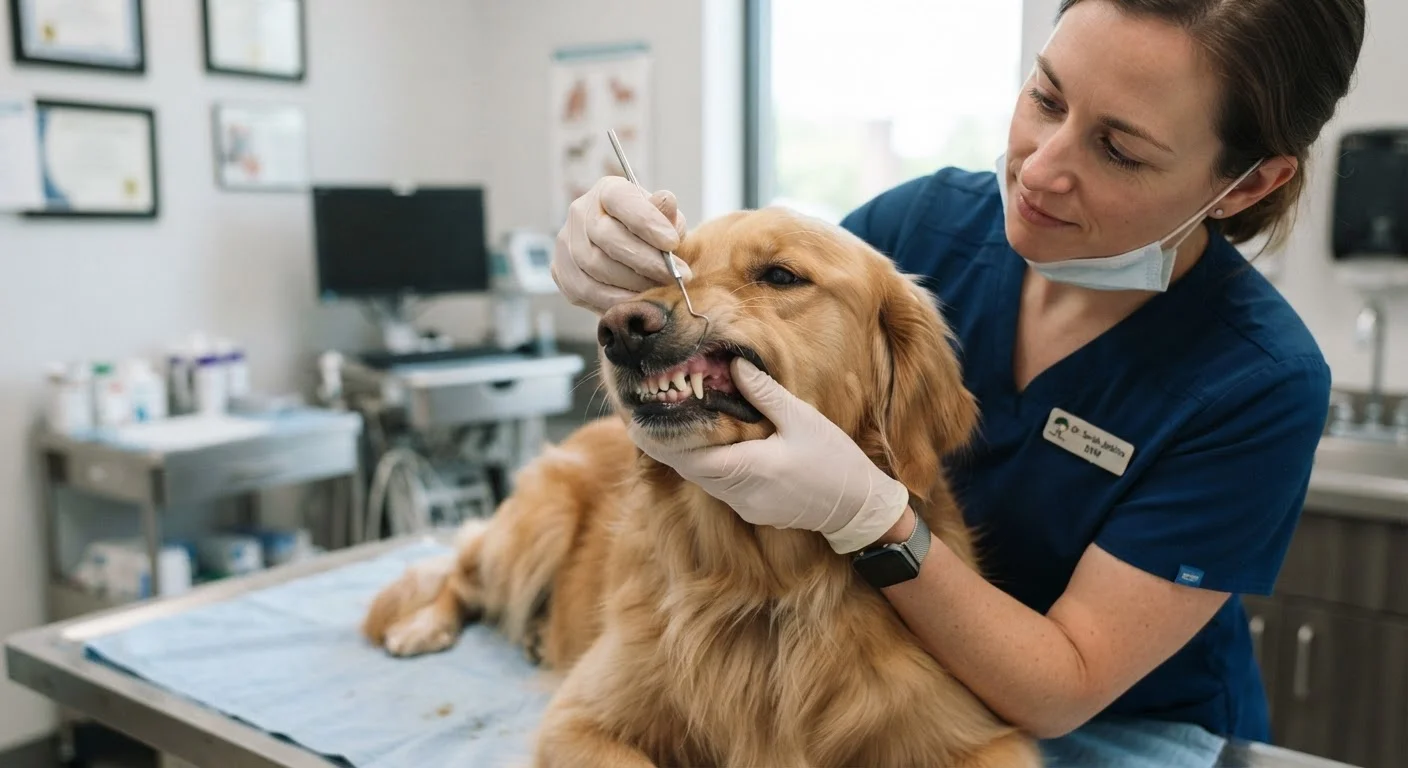
Professional veterinary cleanings under anesthesia remain the only way to properly scale below the gumline, probe pocket depths, and take dental radiographs. Anesthesia allows a thorough, pain-free examination that surface-only approaches simply cannot replicate.
Look for the VOHC Seal on Dental Products
When selecting dental chews, treats, or water additives, look for products carrying the Veterinary Oral Health Council (VOHC) seal. This indicates the product has been evaluated in controlled studies and demonstrated a meaningful reduction in plaque or tartar. Products without this seal have not been independently verified for efficacy.
The Systemic Picture: Oral Health and the Rest of the Body
Research in veterinary medicine has increasingly examined the relationship between chronic oral infection and systemic health. Studies have found associations between severe periodontal disease and pathological changes in the kidneys and liver, and some research suggests possible links to cardiac changes - though the causality and mechanisms are still being refined.
The working hypothesis is that bacteria from infected oral tissue enter the bloodstream repeatedly, creating an ongoing low-grade systemic inflammatory burden. This is biologically plausible given what is known about oral-systemic connections in human medicine, where periodontal disease is similarly associated with systemic conditions.
This context is particularly relevant for pets already managing other health conditions. Owners of animals with weight-related health issues, for example, may be managing multiple inflammation-related conditions simultaneously - an issue addressed in our article on evidence-based weight management for pets.
The takeaway is not to alarm but to contextualize: dental disease is not a cosmetic footnote. It is a genuine chronic health condition that warrants the same proactive attention owners give to parasite prevention, vaccination, and nutrition.
This article is for general informational and educational purposes only and is not a substitute for professional veterinary advice. Always consult a licensed veterinarian for guidance specific to your pet's health needs.