
Why Your Credit Report Deserves a Close Read
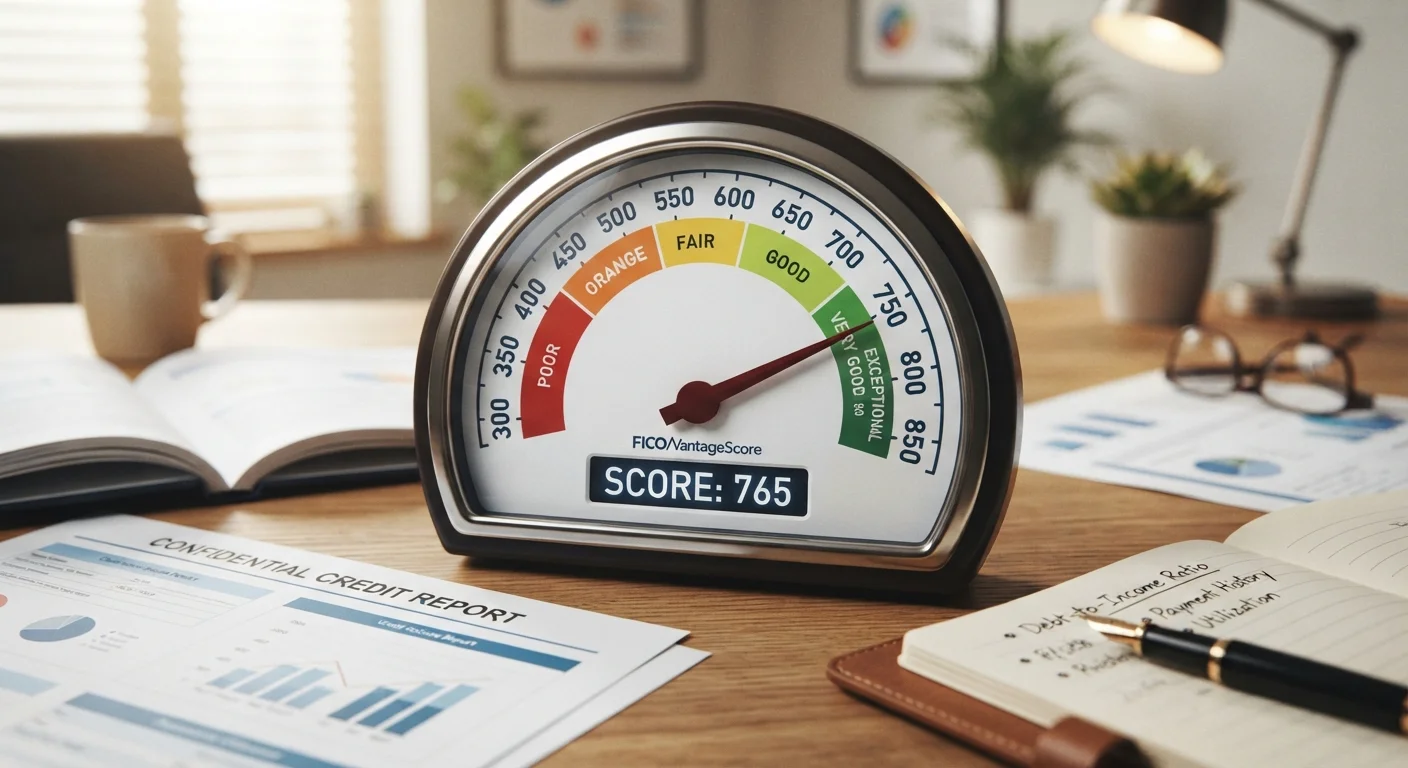
A credit report is not the same thing as a credit score. Your score is a single number derived from the data in your report - a summary. The report itself is the full story: a detailed record of how you've managed borrowed money over time. Lenders, landlords, and sometimes employers use it to assess your reliability.
Understanding what's inside gives you the ability to verify accuracy, catch fraud early, and make sense of why credit decisions go the way they do. If you've ever wondered why your score moved unexpectedly, the answer is almost always in your report. For a deeper look at how that data translates into a number, see how your credit score is calculated.
You can request your reports for free at AnnualCreditReport.com, the only federally authorized source. Each of the three major bureaus - Equifax, Experian, and TransUnion - maintains its own version of your report, and they don't always match, so reviewing all three matters.
What you will need
The Four Sections of Every Credit Report
1. Personal Information
This section lists your name, current and previous addresses, date of birth, Social Security number (partially masked), and employers on record. It does not affect your credit score. Its purpose is identification. That said, errors here - an unfamiliar address or a name variation you don't recognize - can sometimes signal identity theft worth investigating.
2. Accounts (Trade Lines)
This is the most substantial portion of your report. Each credit account appears as its own entry, called a trade line, and includes:
- Creditor name and account number (often partially masked)
- Account type - revolving (credit cards, lines of credit) or installment (mortgages, auto loans, student loans)
- Date opened and current status (open, closed, transferred)
- Credit limit or original loan amount
- Current balance and monthly payment amount
- Payment history - often displayed month by month, showing on-time payments, late payments by severity (30, 60, 90+ days), and any charge-offs
Payment history is the single largest factor in most scoring models, so this section rewards careful attention. For a look at factors beyond the obvious, lesser-known elements that affect your score are worth understanding too.
3. Public Records
Bankruptcies are the primary public record item you'll encounter. Chapter 7 bankruptcies typically remain for up to ten years; Chapter 13 for seven. Judgments and tax liens, while once common, were largely removed from credit reports by the major bureaus in recent years - but verify this with your actual report.
4. Inquiries
Every time someone pulls your credit, an inquiry is recorded. Hard inquiries occur when you apply for credit and can have a minor, temporary effect on your score. Soft inquiries - from pre-approval checks, your own pulls, or employer checks - do not affect your score at all. Hard inquiries stay on your report for two years but typically influence scoring models for only twelve months.
Stagger Your Bureau Requests Year-Round
Instead of pulling all three reports at once, request one from a different bureau every four months. This gives you more frequent visibility into changes without waiting a full year, and it's entirely free under federal law.
How to Spot and Dispute Errors
The Consumer Financial Protection Bureau (CFPB) consistently finds that a meaningful share of consumers have at least one error on their reports. Common problems include accounts that aren't yours, incorrect balances, payments marked late that were actually on time, and accounts that should have been removed but weren't.
When you find something that looks wrong:
- Document it - note the bureau, creditor name, account number, and exactly what is inaccurate.
- File a dispute directly with the bureau reporting the error (Equifax, Experian, and TransUnion each have online dispute portals). You can also dispute with the furnisher - the lender or creditor that reported the information.
- Under the Fair Credit Reporting Act (FCRA), bureaus must investigate disputes and respond within 30 days in most cases.
- If the item is corrected, request an updated report to confirm the change appears.
Disputing an error costs nothing and is a consumer right protected by federal law. If a legitimate negative item is the problem - not an error - the path forward is time and consistent on-time payments rather than a dispute. Some credit repair companies overstate their ability to remove accurate information; be cautious of any service promising guaranteed removals. For a clearer picture of what's myth versus reality, common credit myths worth unlearning is a useful companion read.
Disputing Accurate Information Won't Remove It
A dispute can only succeed if the reported information is genuinely inaccurate, incomplete, or unverifiable. If a negative item is correct - a late payment that really happened, a debt that is truly yours - the bureaus are not required to remove it. Be skeptical of any service that promises otherwise; under the Fair Credit Reporting Act, you have the same dispute rights as any paid service, at no cost.
This article is for general informational purposes only and does not constitute personalized financial or legal advice. For guidance specific to your situation, consult a qualified financial professional.