

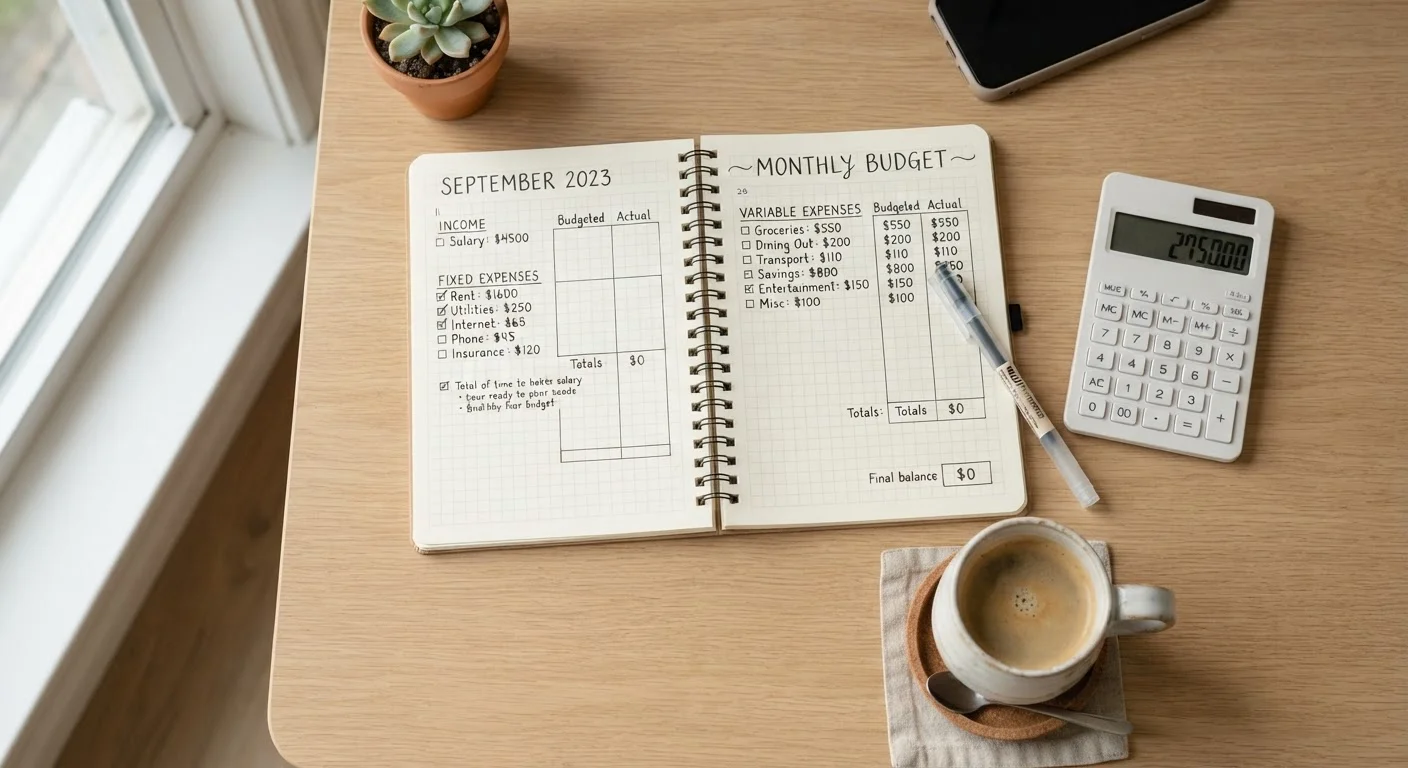
Why a Monthly Budget Is Worth the Effort
A budget is not a punishment - it's a map. Without one, most people spend reactively, wondering at the end of the month where their paycheck went. With one, spending becomes a series of deliberate decisions rather than guesses.
The goal of a first budget isn't perfection. It's clarity. Even a rough spending plan reveals patterns - recurring charges you forgot about, categories where you consistently overspend, and money that could be redirected toward a goal like an emergency fund.
Building a budget from scratch requires about an hour, three months of bank or credit card statements, and your most recent pay stubs. That's it.
Take-home pay
The amount of your paycheck that actually lands in your bank account after taxes and other deductions are removed. This is the figure you should base your budget on.
Fixed expense
A recurring cost that stays the same amount each month, such as rent, a car payment, or a set subscription fee.
Variable expense
A cost that changes from month to month depending on your choices or circumstances, like grocery bills, gas, or dining out.
50/30/20 rule
A simple budgeting guideline that suggests directing 50% of take-home income to needs, 30% to wants, and 20% to savings and debt repayment.
Budget buffer
A small amount of unallocated money set aside in your monthly plan to absorb minor unexpected costs without throwing the whole budget off.
Step 1: Calculate Your Real Take-Home Income
Begin with take-home pay - the amount deposited into your account after taxes, health insurance premiums, and any retirement contributions are deducted. Using gross income leads to an inflated budget that doesn't match reality.
Add all regular income sources: your primary job, any part-time work, freelance payments, or recurring side income. If your income varies month to month, budgeting on a variable income requires a slightly different approach - use a conservative average or your lowest recent month as your baseline.
Write that single number at the top of your budget. Every allocation that follows must fit within it.
Step 2: List and Categorise Your Expenses
Pull your last two to three months of statements and list every expense. Then sort them into two buckets:
- Fixed expenses - costs that are the same every month: rent or mortgage, loan payments, insurance premiums, subscriptions with flat fees.
- Variable expenses - costs that fluctuate: groceries, gas, dining out, clothing, entertainment.
For a thorough reference on what falls under each household category, see this room-by-room spending category guide. It's common to underestimate variable costs, which is why using actual statement data matters more than guessing.
Don't forget irregular expenses - annual subscriptions, vehicle registration, or holiday spending. Divide each by 12 and include the monthly equivalent in your plan.
Use Real Numbers, Not Estimates
Guessing at spending categories is the most common first-budget mistake. Pull your actual bank and credit card statements for the past two to three months and use real averages. It takes an extra 20 minutes but produces a far more accurate starting point.
Step 3: Apply a Simple Budgeting Framework
With income and expenses on paper, apply a structure. The 50/30/20 rule is a practical starting point for beginners:
- 50% of take-home pay toward needs (housing, utilities, groceries, minimum debt payments, transportation)
- 30% toward wants (dining out, entertainment, hobbies, subscriptions)
- 20% toward savings and additional debt repayment
These percentages are guidelines, not mandates. High housing costs in expensive cities, for example, may push the needs category to 60% or more. Adjust the remaining categories accordingly and revisit as circumstances change.
If you prefer to assign every dollar a specific purpose before the month begins, zero-based budgeting is a more structured alternative worth exploring.
Step 4: Balance Your Budget and Build In Flexibility
Subtract your total planned expenses from your take-home income. If the result is zero or positive, your budget is balanced. If it's negative, you're planning to spend more than you earn - and that gap needs addressing before the month starts, not after.
When expenses exceed income, focus on variable costs first. Fixed expenses are harder to change quickly. Reducing dining out, pausing non-essential subscriptions, or consolidating errands to cut fuel costs are faster levers.
Build a small buffer - even $50 to $100 - into your budget as a miscellaneous category. Real months don't follow perfect plans. A buffer prevents one unexpected expense from derailing everything. For longer-term resilience, building a budget that survives financial setbacks covers how to plan for larger disruptions.
Don't Set Targets That Are Too Tight
A budget that leaves no room for small pleasures or minor surprises tends to collapse quickly. Overly restrictive spending limits feel manageable in theory but create frustration in practice. Build in realistic allowances, even modest ones, for discretionary spending - sustainability matters more than short-term severity.
Choosing How to Track Your Budget
The best tracking method is the one you'll actually maintain. Three common options each suit different habits:
- Pen and paper - tactile, simple, requires no technology, but can be harder to total quickly.
- Spreadsheets - flexible and free, easy to customise, best for people comfortable with basic formulas.
- Budgeting apps - automate transaction imports and categorisation, but require ongoing access to financial accounts.
A detailed comparison of all three approaches is available in this budgeting method comparison. Whichever you choose, schedule a 15-minute monthly review to compare your plan against actual spending.
Most budgets don't fail because of bad math - they fail because of overlooked patterns or unrealistic expectations. If yours stalls after a few weeks, understanding why budgets fail in month two can help you course-correct before giving up.
This article provides general financial information for educational purposes only and is not personalised financial advice. Consult a qualified financial professional for guidance specific to your situation.