
What Each Approach Actually Puts Into the Soil
At first glance, both organic matter and synthetic fertilisers serve the same basic purpose: getting nutrients to plants. But what they deliver - and how - is fundamentally different, and that distinction shapes everything from how your plants grow to how your soil behaves five years from now.
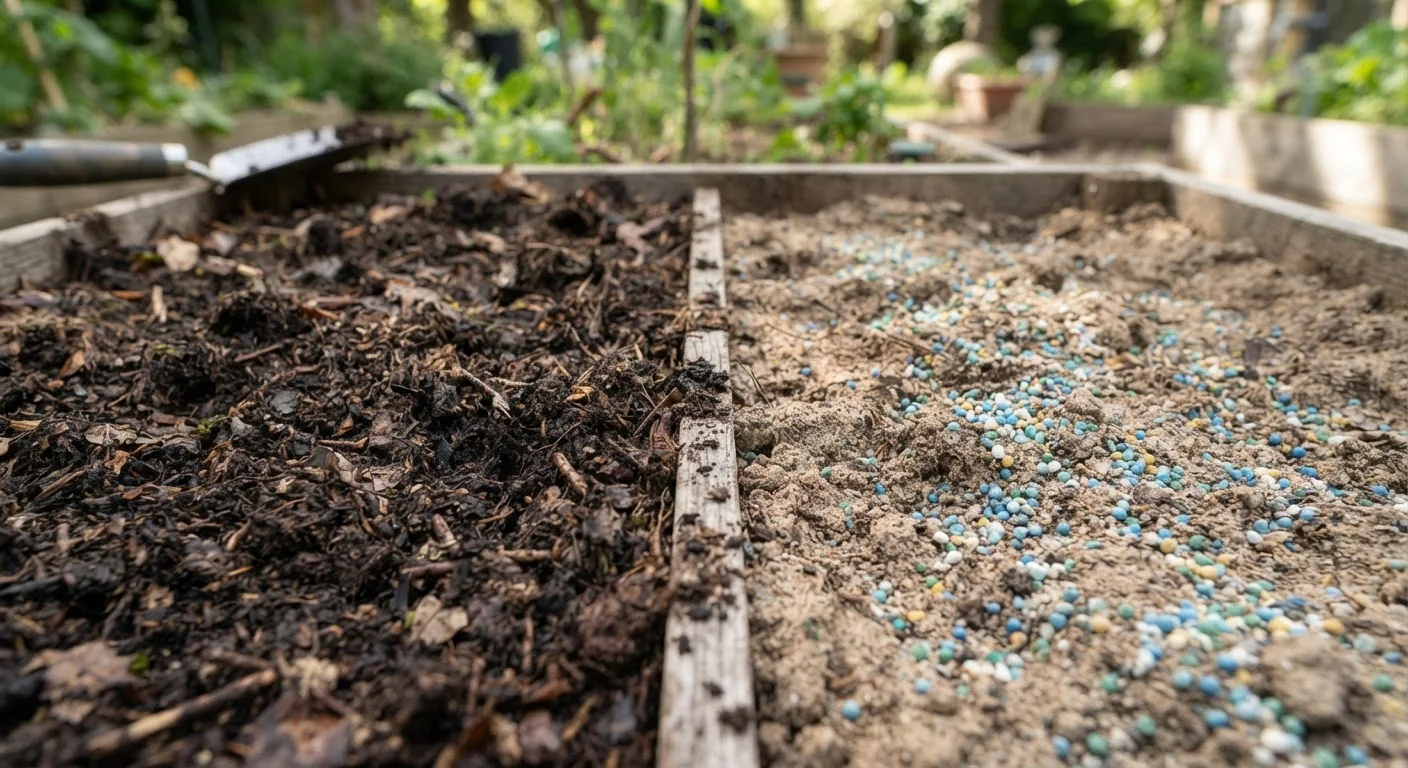
Organic matter - including compost, leaf mold, aged manure, and cover crop residue - is decomposed or decomposing biological material. It feeds soil rather than plants directly. As microorganisms break it down, nutrients like nitrogen, phosphorus, and potassium are gradually released in plant-available forms. Crucially, this process also deposits humus (stabilized organic carbon) into the soil matrix, improving its physical structure.
Synthetic fertilisers are manufactured compounds - typically derived from industrial processes - that deliver concentrated, soluble nutrients in forms plants can absorb almost immediately. A bag of 10-10-10 fertiliser, for instance, guarantees precise ratios of nitrogen, phosphorus, and potassium (N-P-K). There is no biological middleman; the nutrients are chemically ready for plant uptake.
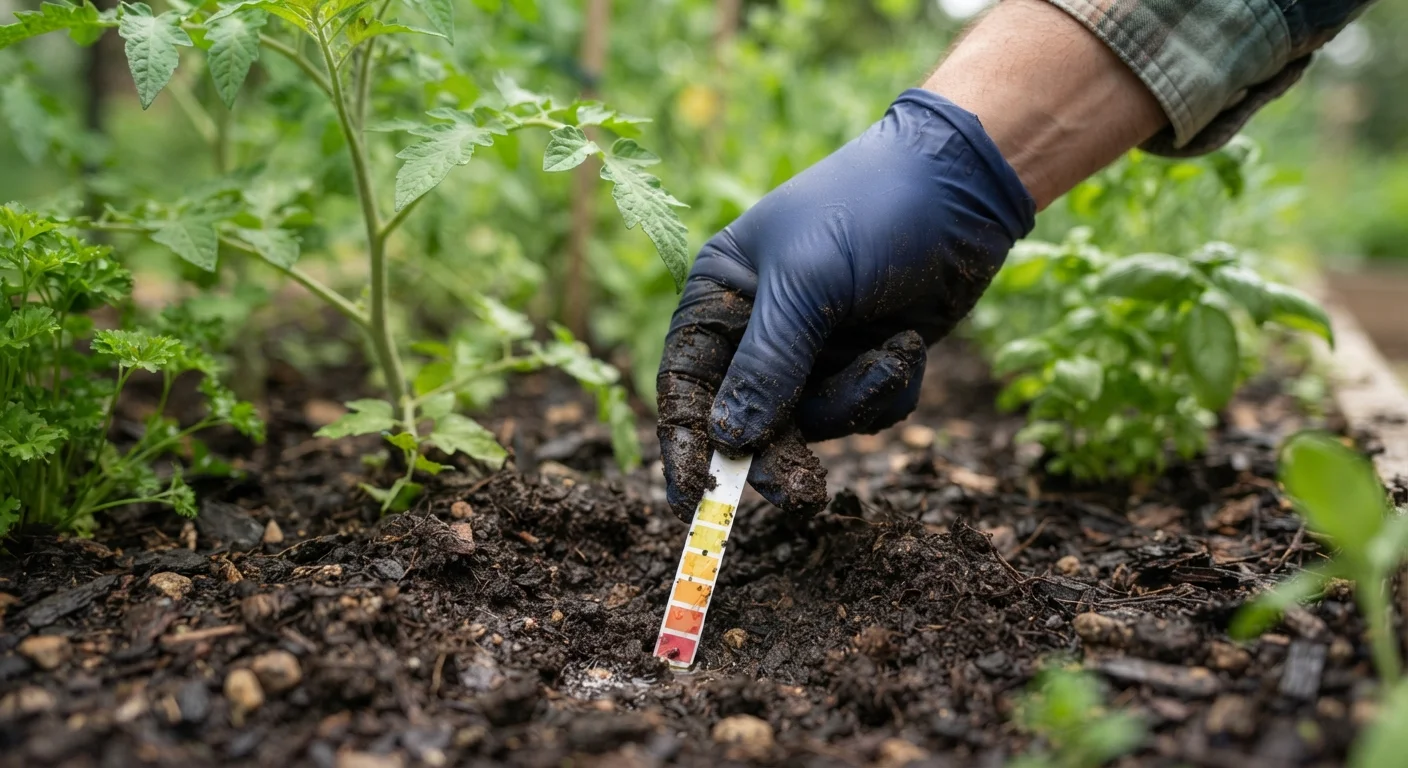
Understanding how soil pH affects nutrient availability is essential alongside this comparison, because even the best amendment can underperform if your pH sits outside the optimal range for your plants.
| Criterion | Organic Matter | Synthetic Fertiliser |
|---|---|---|
| Nutrient availability | Slow, gradual release via biology | Fast, immediate plant uptake |
| Soil structure impact | Significantly improves over time | Little to no structural benefit |
| Microbial life support | Feeds and supports soil biology | Neutral to potentially suppressive |
| Leaching / runoff risk | Lower - nutrients bound organically | Higher - soluble nutrients mobile in water |
| Precision of nutrient ratios | Variable; depends on source material | Highly precise and consistent |
| Cost and accessibility | Low if homemade; moderate if purchased | Generally affordable and widely available |
| Salt buildup risk | Negligible | Present with heavy or repeated use |
The Long Game: How Each Affects Soil Biology and Structure
The most significant divergence between organic matter and synthetic fertilisers isn't nutrient content - it's what happens to the soil ecosystem over time.
Healthy soil is a living system. A single teaspoon of productive garden soil can contain billions of bacteria, fungi, protozoa, and nematodes that cycle nutrients, suppress disease, and help plant roots access water. Organic matter is essentially food and habitat for this community. Consistent additions of compost have been shown in agricultural research to increase microbial biomass, improve soil aggregation (the clumping of particles that creates good texture and drainage), and enhance moisture-holding capacity - all of which reduce how much work you need to do as a gardener.
Synthetic fertilisers, by contrast, bypass the biological cycle. They feed the plant directly but provide little to nothing for soil organisms. Repeated exclusive use - particularly at high concentrations - can raise soil salinity through salt accumulation, which stresses or suppresses microbial populations. Over time, soils managed primarily with synthetics can become compacted, structurally degraded, and increasingly dependent on external nutrient inputs.
A Note on 'Organic' Fertiliser Products
Bagged products labelled 'organic fertiliser' (such as blood meal, bone meal, or feather meal) are not the same as compost or raw organic matter. They are refined organic-source nutrient concentrates that release more quickly than compost but slower than fully synthetic options. They don't deliver the same structural or biological benefits as bulk organic matter additions, though they can be a useful middle-ground nutrient source.
This doesn't mean synthetic fertilisers are inherently damaging when used appropriately. The problem typically arises from chronic overuse without concurrent attention to organic matter levels. Many productive gardens rely on both tools in tandem.
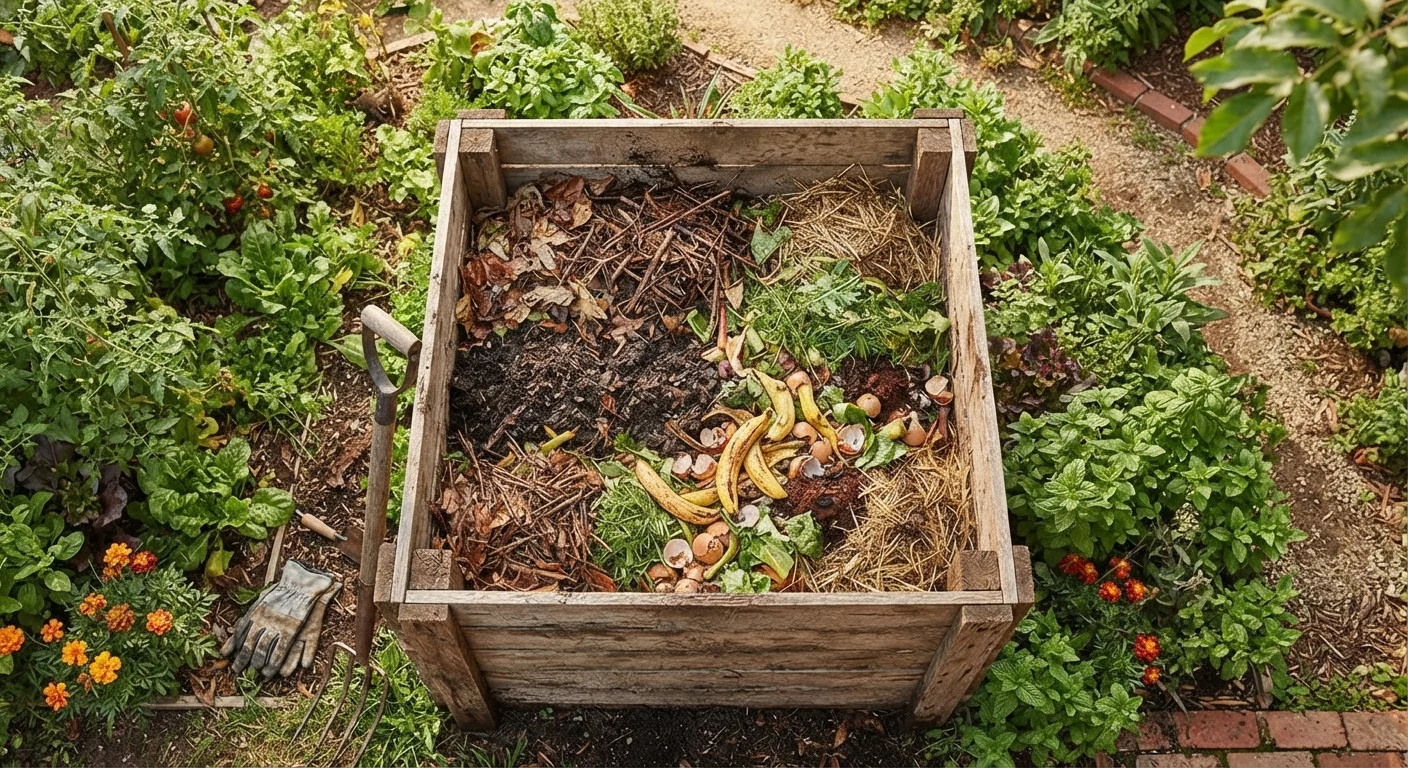
If you're considering making your own compost to build organic matter, composting at home from kitchen scraps is a practical starting point that costs very little to set up.
Nutrient Release, Timing, and the Risk of Runoff
Speed and control are where synthetic fertilisers have a genuine practical advantage. When a plant is visibly deficient - yellowing leaves indicating nitrogen shortage, for example - a targeted synthetic application can correct the problem within days. Organic amendments simply cannot move that fast; nutrient release depends on soil temperature, moisture, and microbial activity, all of which are variable.
That said, the same solubility that makes synthetics fast-acting also makes them more prone to leaching. Water-soluble nutrients can wash beyond the root zone after heavy rain or irrigation, contributing to water quality concerns in surrounding environments. Slow-release synthetic formulations reduce this risk somewhat, but the issue doesn't disappear entirely.
Organic matter releases nutrients more gradually, which generally means lower peak availability but more sustained supply over the growing season. Because nutrients are bound within organic structures and released biologically, loss through leaching tends to be lower - a meaningful advantage in sandy or heavily watered soils.
4-5%
Organic matter target for healthy garden soil
Soil scientists and extension services generally cite 4-5% organic matter by weight as a benchmark for productive, well-structured garden beds.
~30%
Potential nitrogen loss from leaching in sandy soils
Research in agricultural soil science suggests soluble nitrogen in sandy or highly irrigated soils can leach significantly beyond the root zone without slow-release mechanisms.
The practical takeaway: if you're working a soil that already has decent organic matter levels (above 4-5% by weight is generally considered healthy for most garden beds), synthetic fertilisers become a supplemental tool rather than a primary strategy. If your organic matter is low, building it up with compost should be the priority regardless of what else you add.