
Understanding the Core Difference
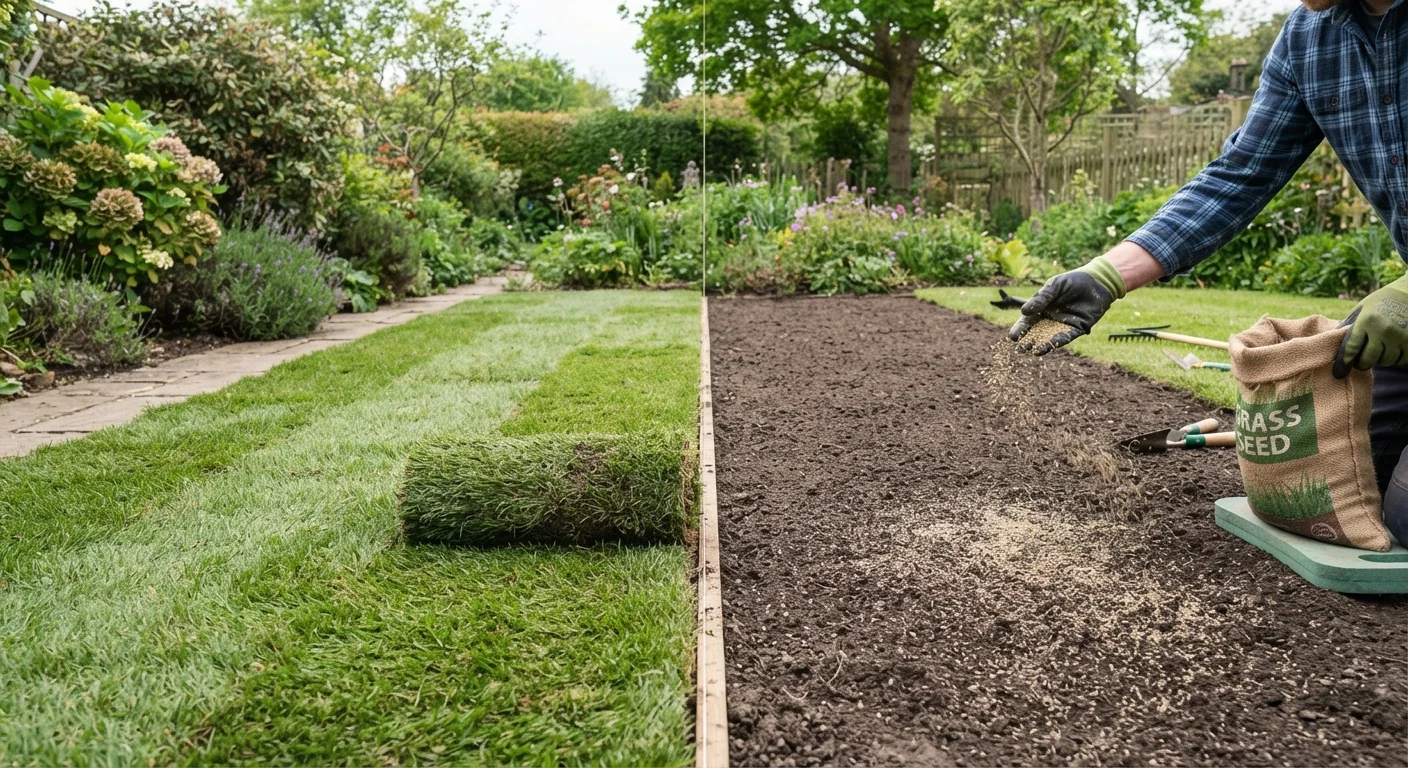
A new lawn can be established in two fundamental ways: growing it from seed sown directly into prepared soil, or laying pre-grown turf (also called sod) that roots into the ground within a few weeks. Both methods can produce a healthy, durable lawn - but they follow very different timelines, carry different price tags, and place different demands on the gardener.
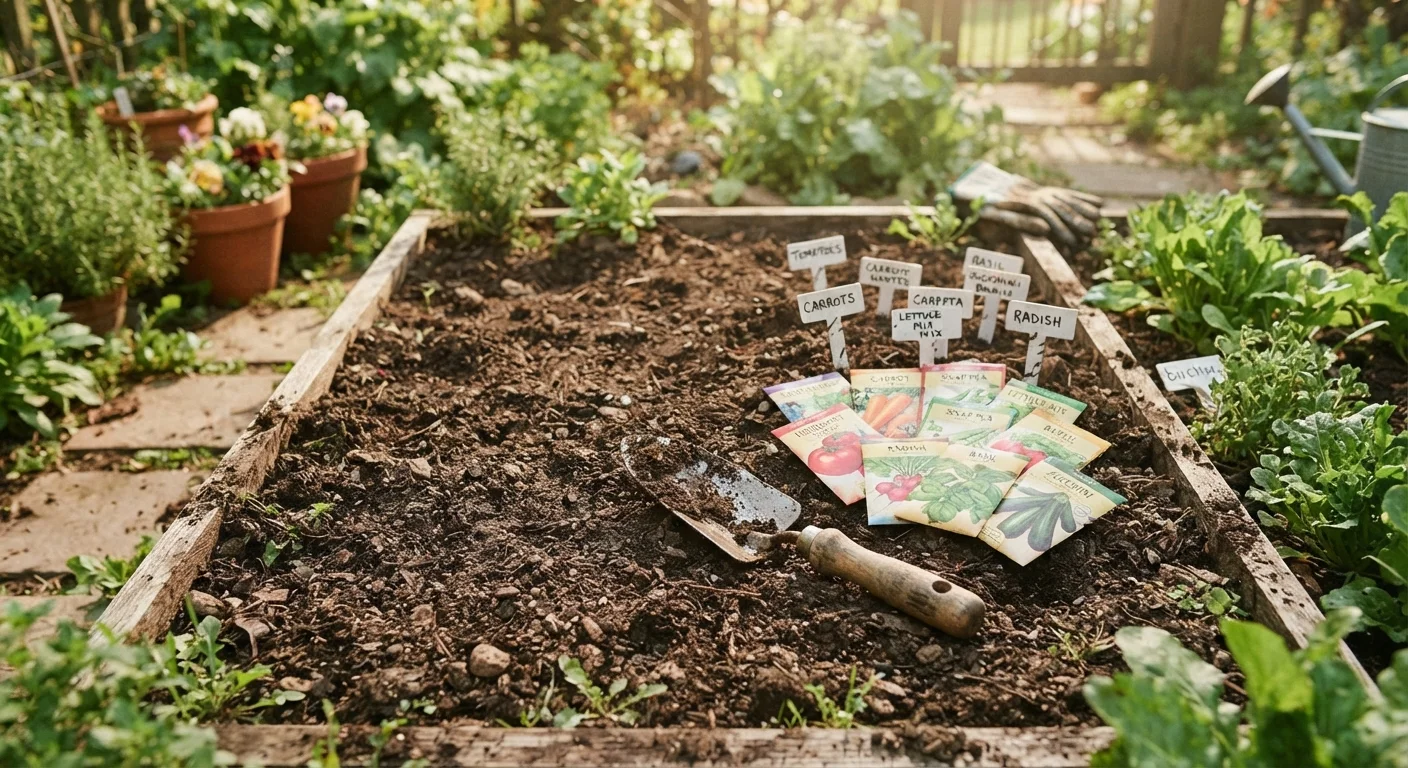
Before committing to either approach, it helps to think clearly about your situation: how quickly you need a functional lawn, what your budget allows, the time of year you're working, and how much aftercare you can realistically provide. If you're also planning surrounding garden beds, our guide to starting a garden from scratch covers the broader groundwork that applies to any new outdoor space.
Pros and Cons of Laying Turf
Turf is essentially a finished lawn product - grass that has been grown commercially, harvested in rolls or slabs, and delivered ready to lay. The primary appeal is speed.
Near-instant visual results and ground cover
Turf transforms bare soil into a green lawn within a single day of installation, which is particularly valuable if the area needs to be functional or presentable quickly.
Shorter establishment period before foot traffic
Most turf varieties can handle light use within three to four weeks of laying, compared to the eight-plus weeks typically needed for seeded grass.
Effective erosion control from day one
Because turf arrives with an intact root mat, it holds soil in place immediately - a clear advantage on slopes or areas prone to rain runoff.
Reduced weed competition during establishment
Dense turf leaves little bare soil exposed, giving weed seeds far fewer opportunities to germinate compared to a seedbed that remains open for weeks.
The trade-offs are real, though. Cost is the most significant barrier: turf typically runs several times more per square foot than seed when you factor in the material itself, delivery, and - if you hire help - labor. The installation window is also narrow; turf must be laid promptly after delivery and watered heavily for the first two to three weeks while roots anchor into the soil below.
Significantly higher upfront cost than seed
Turf materials, delivery, and installation can cost several times more per square foot than seeding the equivalent area, making it a considerable investment for larger lawns.
Limited grass variety selection
You're restricted to whatever species your local turf supplier grows, which may not include cultivars optimized for deep shade, heavy drought, or low-traffic use.
Time-sensitive handling after delivery
Turf must be laid within 24-48 hours of delivery or it begins to deteriorate, which can create logistical pressure especially for larger areas.
Roots may not penetrate deeply in poor soil
If subsoil conditions are neglected, turf can fail to anchor properly and may peel or die back during dry spells, because the roots never fully integrate with the ground below.
Turf also limits your grass variety choices to whatever the supplier grows. If you have a shaded yard or need a specific drought-tolerant cultivar, availability may be limited depending on your region.
Pros and Cons of Seeding
Seeding is the traditional, lower-cost route. You prepare the soil, broadcast or rake in seed, keep it consistently moist, and wait. The range of available grass species is far wider than turf suppliers typically stock, letting you choose a cultivar matched precisely to your climate, shade level, and intended lawn use.
Establishment, however, takes time - often eight to sixteen weeks before the lawn can handle regular foot traffic. During that window the soil must stay evenly moist and the seedbed protected from birds, wind erosion, and competing weeds. Timing is critical: cool-season grasses (fescues, bluegrass, ryegrass) establish best when sown in early fall, while warm-season types (Bermuda, zoysia) prefer late spring. Sowing outside the optimal window dramatically reduces germination rates.
Cool-Season vs. Warm-Season Grass Timing
Cool-season grasses such as tall fescue and Kentucky bluegrass germinate best when soil temperatures sit between 50°F and 65°F - typically early fall in most of the US. Warm-season types like Bermuda and zoysia prefer soil above 65°F, making late spring the ideal seeding window. Sowing outside these ranges risks poor germination regardless of seed quality or soil preparation.
A seeded lawn's deeper root development - when the process goes well - can make it more drought-resilient over time than turf. However, outcomes vary with soil quality, seed quality, and aftercare consistency.
Soil Preparation: The Factor Both Methods Share
Whichever route you choose, the single most important step is soil preparation. Compact, nutrient-poor, or poorly drained soil will undermine turf and seed alike. At minimum, this means:
- Clearing existing vegetation and debris thoroughly
- Breaking up compacted soil to a depth of at least four inches
- Correcting drainage issues before laying or sowing
- Amending with compost or appropriate topsoil if the base is sandy or heavy clay
- Raking to a level, fine-textured surface
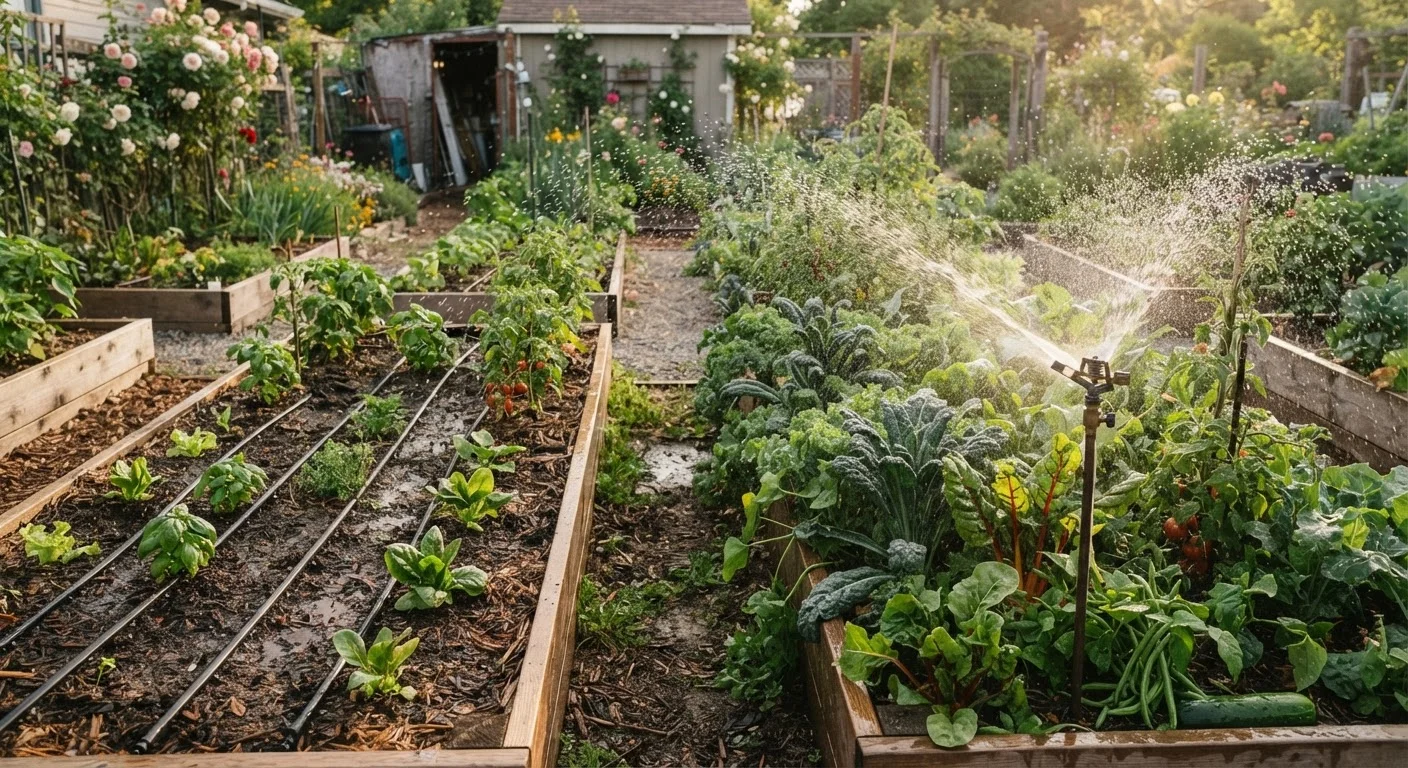
Cutting corners on preparation is the most common reason new lawns fail. Once your lawn is established, managing moisture efficiently becomes the next priority - see our comparison of drip irrigation vs. sprinkler systems for guidance on keeping new grass watered without over- or under-doing it.
Making the Final Call
Run through these practical checkpoints before deciding:
- Budget: If cost is a constraint, seed is almost always the more economical path for larger areas.
- Timeline: Need a lawn ready for a specific date? Turf is more predictable - seedling establishment can be delayed by weather.
- Season: Turf can be laid in spring or fall in most US climates; seed is more season-sensitive depending on grass type.
- Lawn size: For very small areas, turf is manageable as a DIY project. For larger spaces, seed may be the only practical option without professional help.
- Aftercare capacity: Both need consistent watering in early weeks, but seed requires more vigilant, sustained attention before it can tolerate any stress.
There is no universally correct answer. The best lawn method is the one that fits your actual circumstances - and that you can see through to establishment with the attention it requires.