
Why the Three Ds Framework Matters
Duration, distance, and distraction - often called the "three Ds" in applied animal behavior - represent the three independent dimensions along which any stay behavior must be strengthened. Most owners intuitively understand that a dog should stay longer and from farther away, but treat these as a single sliding scale. They are not. A dog that holds a 60-second stay beside you may fall apart the moment you step back three feet, because each variable places a distinct cognitive and impulse-control demand on the animal.
This framework is grounded in the principles of operant conditioning: behavior that is reliably reinforced across varied conditions generalizes more durably. The practical result is a dog that stays not because conditions are perfect, but because the behavior itself has been rewarded across enough contexts to become the dog's default response. For a deeper look at how reinforcement shapes what your dog repeats, see the reinforcement cycles behind stubborn dog behaviors.
What you will need
What You'll Need Before Starting
A successful stay training program requires very little equipment but significant consistency. High-value rewards - typically small pieces of meat, cheese, or another food your dog works enthusiastically for - are non-negotiable. Generic dry kibble often lacks the motivational pull needed to compete with environmental distractions at later training stages.
High-value training treats
Reward the dog immediately for holding the stay position; high value increases motivation.
Six-foot leash
Provides a safety tether when practicing distance work in semi-public environments.
Training clicker
Marks the exact moment the dog performs the desired behavior with precision timing.
If you are new to structured dog training, reviewing foundational training principles before starting will help you get more from each session.
Step-by-Step Training Instructions
Follow these steps in sequence. Resist the urge to skip ahead - each stage builds the neurological and behavioral foundation the next stage depends on. The principles behind this kind of gradual skill-building parallel what learning science recommends for humans acquiring any new skill; the strategies that help new learning stick map closely to how dogs consolidate behavioral learning across sessions.
Establish a clear stay cue and release word
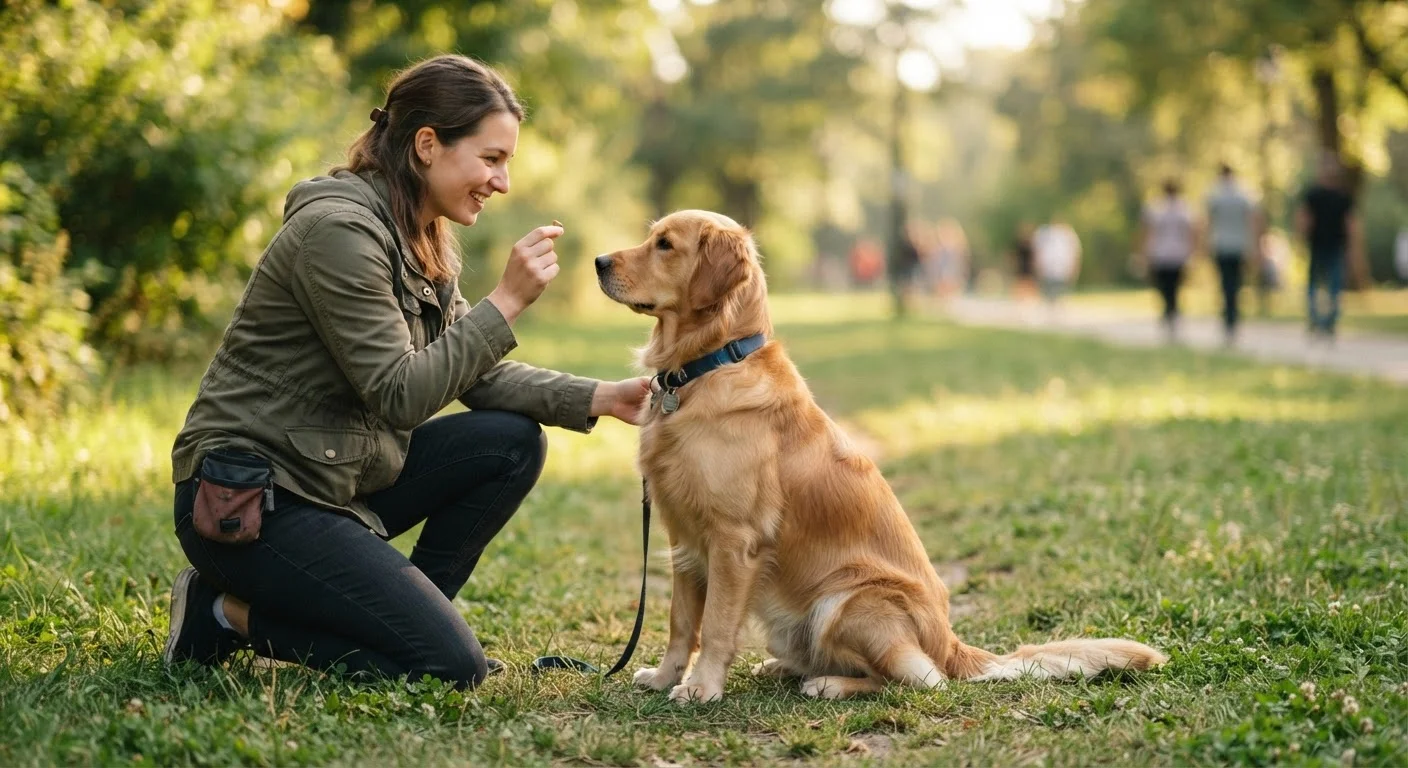
Ask your dog to sit or lie down. With a calm, flat voice, say "stay" once and immediately deliver a treat without asking the dog to move. Use your chosen release word (e.g., "free") to signal the behavior is over. Practice this 5-8 times in a single session. The goal here is not duration - it is teaching the dog that "stay" predicts rewards and "free" ends the exercise.
Build duration in small increments
Once your dog understands the cue-and-release pattern, begin extending the time between giving the cue and delivering the reward. Add one to two seconds at a time. Vary the intervals - sometimes reward at 3 seconds, sometimes at 5, then back to 2 - so the dog cannot predict exactly when the treat is coming. This variable reinforcement schedule strengthens the behavior. A dog holding a 30-second stay reliably is ready to move on.
Introduce distance gradually
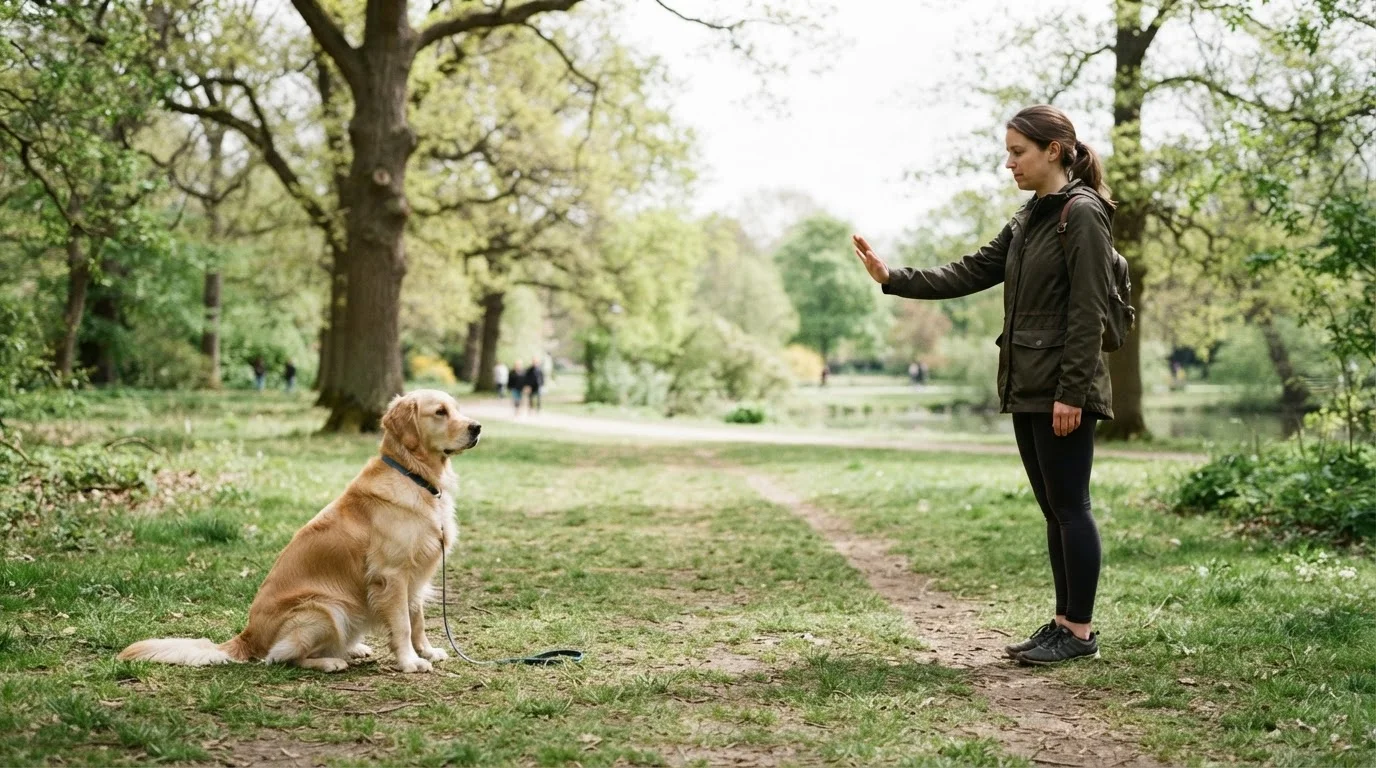
Cue the stay, then take one step back. Return to your dog and reward before giving the release. Add distance one step at a time over multiple sessions. Your dog's ability to maintain the stay at 10 feet is the milestone to work toward before layering in distractions. If the dog breaks the stay, calmly return to them without scolding, reduce the distance, and rebuild.
Add controlled distractions
Begin with mild distractions - a toy placed nearby, light foot traffic, or another person walking past at a distance. Reward heavily for maintaining the stay despite the distraction. Gradually increase distraction intensity: movement closer to the dog, outdoor environments, or other animals at a distance. Reset to easier conditions when the dog struggles. See why reinforcement history shapes behavior to understand what drives your dog's choices in high-distraction moments.
Combine the three variables systematically
Only after your dog demonstrates solid performance across each variable individually should you begin combining them. Increase one variable at a time when combining - for example, practice longer duration at short distance before adding distance again. Aim for sessions of 3-5 minutes. The quiet errors that stall training progress are often introduced at exactly this stage when owners add too much complexity at once.
Common Setbacks and How to Address Them
Dogs break stays for predictable reasons: the challenge was increased too quickly, the reinforcement history in that environment is thin, the dog is physically uncomfortable, or the session ran too long. None of these are signs of a stubborn or untrainable dog - they are information about where the training needs adjustment.
When a dog breaks a stay, the correct response is to calmly re-cue the sit or down, reduce the difficulty, and get several successful repetitions before ending the session. Frustration or repeated scolding after a break can make the dog anxious around the exercise, which compounds difficulty. Tracking your sessions - noting what worked, where breaks occurred, and what conditions were present - helps identify patterns. The habit-formation science behind building behaviors that last applies to trainer consistency just as much as it does to the dog's learning.
This article provides general pet training information and is not a substitute for guidance from a certified professional dog trainer or veterinary behaviorist, particularly for dogs displaying anxiety, fear, or aggression during training.