

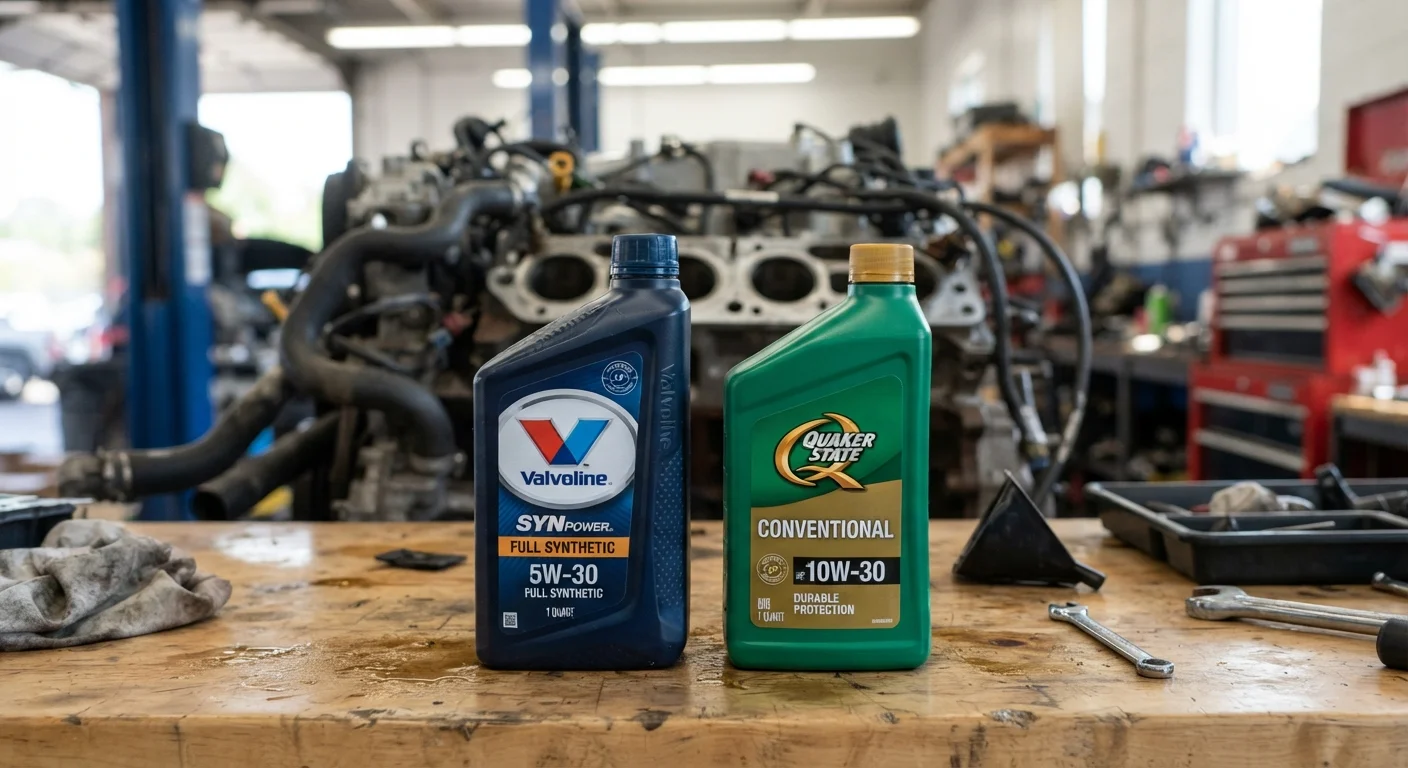
How Each Oil Type Is Made - and Why It Matters
Conventional engine oil starts as crude petroleum pumped from the ground. It's refined to remove impurities and blended with additives to meet viscosity and performance standards. Because crude oil is a natural product, the base molecules vary in size and shape - even after refining. That inconsistency limits how well the oil performs under extreme heat or cold.
Synthetic oil, by contrast, is built in a lab. Chemists start with a base stock - often derived from natural gas or highly refined petroleum - and assemble uniform, precisely shaped molecules. Those additives (detergents, anti-wear agents, viscosity modifiers) are then blended in controlled ratios. The result is an oil that behaves more predictably across a wider temperature range and resists breakdown longer.
A third category - synthetic blend - sits in between. It mixes conventional base oil with a portion of synthetic, offering some of synthetic's benefits at a lower price point. Blends are common in trucks and SUVs doing moderate towing or hauling.
| Criterion | Synthetic Oil | Conventional Oil |
|---|---|---|
| Base stock origin | Engineered molecules (lab-built) | Refined crude petroleum |
| Typical change interval | 7,500-15,000 miles | 3,000-5,000 miles |
| Cold-weather startup flow | Flows faster at low temps | Thickens more in cold |
| Heat resistance | Higher thermal stability | Degrades faster under heat |
| Cost per quart | Higher (approx. 2-4× more) | Lower upfront cost |
| Suited to turbocharged engines | Yes - typically required | Generally not recommended |
| Availability | Widely available | Widely available |
Performance, Protection, and Change Intervals
The biggest practical difference for most drivers comes down to how long each oil stays effective. Conventional oil degrades faster because its irregular molecules break down more quickly under heat and friction. Most vehicle manufacturers and oil companies recommend conventional oil changes every 3,000 to 5,000 miles - though the 3,000-mile rule is widely considered outdated for modern vehicles. See our breakdown of common oil change myths for more on this.
Synthetic oil's uniform molecular structure resists oxidation and shear - the process by which oil molecules get torn apart by engine components - for significantly longer. Depending on the vehicle and oil grade, full synthetic can remain effective for 7,500 to 15,000 miles. Some manufacturers even specify extended intervals of up to 10,000 miles for their synthetic-equipped vehicles.
In cold climates, synthetic oil flows faster on startup - the period when most engine wear actually occurs. In extreme heat, it's less likely to thin out and lose its protective viscosity. For turbocharged engines, which reach high temperatures quickly, that thermal stability is particularly important.
7,500-15,000 mi
Typical synthetic oil change interval
Most full-synthetic oil manufacturers and vehicle OEMs publish recommended intervals in this range, compared to 3,000-5,000 miles for conventional.
~90%
Engine wear occurs at cold startup
Industry engineers widely cite that the majority of engine wear happens in the first moments after a cold start, before oil fully circulates - an area where synthetic's faster flow helps.
2-4×
Synthetic vs. conventional cost per quart
Full synthetic oil typically costs two to four times more per quart than conventional, though extended intervals can offset this difference over a full year of driving.
Cost Considerations and What Your Owner's Manual Says
Full synthetic oil costs more per quart than conventional - roughly two to four times as much depending on brand and grade. However, if synthetic allows you to go twice as long between changes, the annual cost difference narrows considerably. Factor in labor if you're paying for service rather than doing it yourself, and synthetic often makes economic sense for many drivers.
That said, cost shouldn't be the first consideration. Your vehicle's owner's manual is the authoritative source on what oil type and viscosity your engine needs. Using conventional oil in an engine specified for synthetic can leave critical components underprotected, particularly during cold starts or in high-heat conditions. Conversely, using full synthetic in an engine that only requires conventional is unlikely to cause harm - but it may not be necessary.
If your vehicle is under warranty, using the wrong oil type could complicate a claim related to engine damage. When in doubt, follow the manufacturer's specification. A qualified mechanic can also advise based on your specific engine and driving patterns.
This article is for general informational purposes. Always consult your vehicle's owner's manual and, where needed, a qualified mechanic for advice specific to your car and driving conditions.