
Understanding the Three Main Training Formats
Dog training is not one-size-fits-all. Whether you enroll in a local group class, hire a private trainer, or work through exercises on your own, each format carries distinct strengths and real limitations. Understanding those trade-offs - rather than defaulting to whichever option is most convenient - will give you a better outcome for both you and your dog.
It also helps to separate the format of training from the methods used within it. A group class can use positive reinforcement or outdated aversive techniques; so can a private trainer. Before committing to any format, verify that the trainer's methods align with current behavioral science. For a deeper look at how methods compare, see what the research shows on training methods.
Credentials Matter Across All Formats
Dog training is not a licensed profession in most US states, meaning anyone can call themselves a trainer. Whether hiring a private trainer or evaluating a group class instructor, look for credentials from recognized bodies such as the CCPDT or IAABC. These organizations require demonstrated knowledge of learning theory and adherence to a code of ethics. A credential is not a guarantee, but it raises the floor considerably.
Group Classes: Pros and Cons
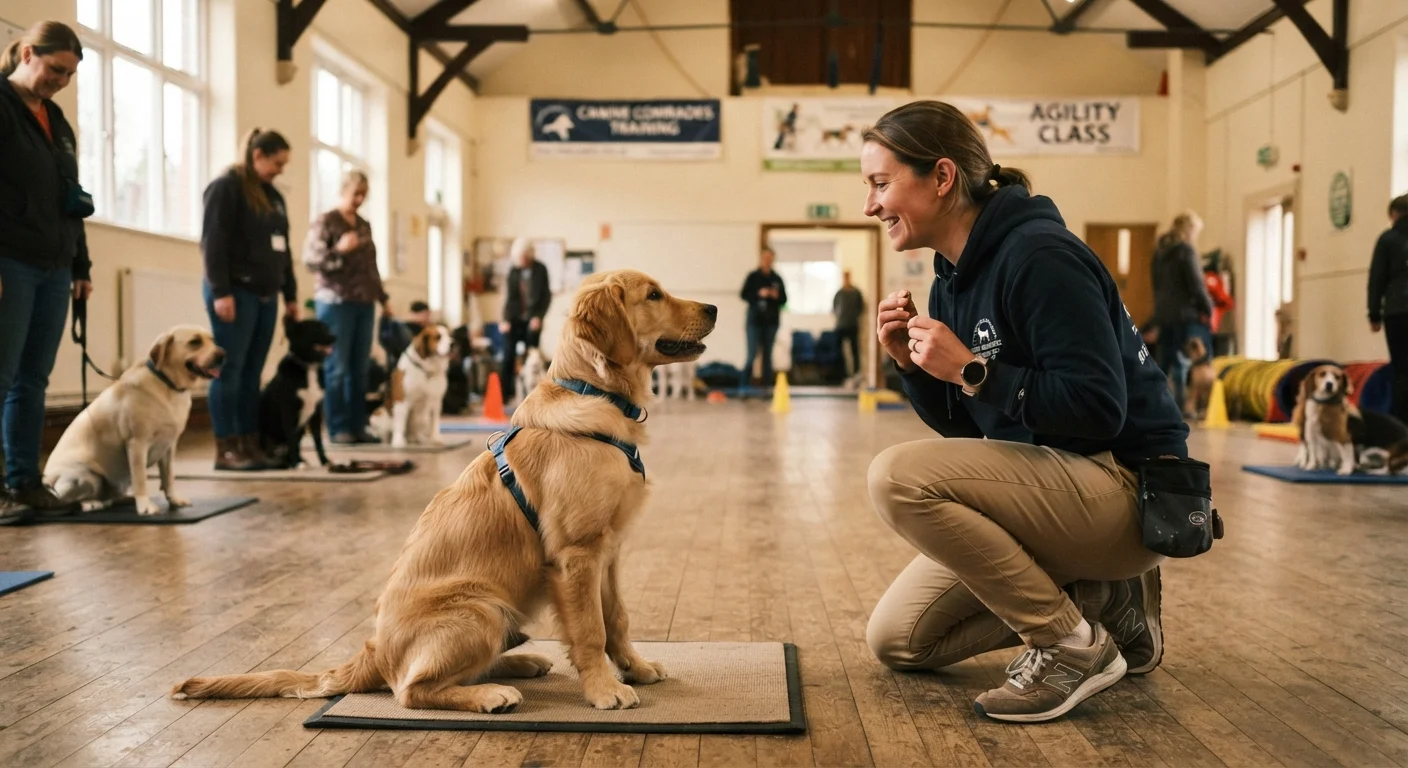
Group obedience classes typically meet once a week for five to eight weeks, with a trainer guiding multiple dog-and-owner pairs through the same curriculum. This format is widely available through pet stores, humane societies, and independent training facilities.
Group classes provide built-in socialization opportunities
Controlled exposure to other dogs and people in a structured setting is valuable, particularly for puppies in their socialization window. This is difficult to replicate in private or home-based training.
Lower cost per session than private training
Group classes typically cost a fraction of private sessions, making professional guidance accessible to owners on tighter budgets without sacrificing trained oversight entirely.
Shared learning environment can motivate owners
Seeing other dog-owner pairs work through the same challenges can normalize the difficulty of training and sustain owner engagement across a multi-week course.
The primary drawback is limited individual attention. Trainers are managing the entire class, which means your dog's specific quirks - pulling on leash, fear responses, selective listening - may not get addressed in depth during class time. Dogs with reactivity toward other animals or people are often genuinely poor candidates for group settings until those issues are resolved.
Limited individual attention in group settings
A trainer managing six to ten pairs simultaneously cannot closely monitor each dog's specific responses or correct owner technique in real time. Individual issues often go unaddressed.
Not suitable for reactive or fearful dogs
Dogs with significant reactivity toward other animals or people can become overwhelmed in group environments, making the setting counterproductive and potentially setting back behavioral progress.
Self-directed training lacks expert feedback
Without a professional watching timing, mechanics, and dog body language, owners can inadvertently reinforce unwanted behaviors or miss early signs of stress in their dog.
Private training carries higher upfront cost
Per-session rates for qualified private trainers are substantially higher than group classes, and complex behavioral issues may require an extended series of sessions to address durably.
Private Trainers: Who Benefits Most
One-on-one sessions with a professional trainer allow the curriculum to be built entirely around your dog. This format is especially valuable when a dog has a history of aggression, separation anxiety, fear-based reactivity, or other behavioral concerns that require careful, individualized management.
Private training also benefits owners who struggle to generalize skills from a class to their home environment. A trainer who visits your home can address context-specific problems - bolting out the front door, jumping on specific family members, reacting to the mail carrier - that simply cannot be replicated in a classroom.
~$50-$125
Typical cost per private training session
Industry surveys and trainer directories suggest private sessions in the US commonly range from $50 to $125 per hour, though rates vary significantly by region and trainer credentials.
~$100-$200
Average group class package cost
Multi-week group obedience courses at training facilities and pet stores in the US typically range from $100 to $200 for a complete course of five to eight sessions.
The cost is the most significant barrier. Private sessions can run two to three times the per-session cost of group classes, and resolving complex behavioral issues may require multiple sessions. Look for trainers who hold credentials from recognized organizations such as the Certification Council for Professional Dog Trainers (CCPDT) or the International Association of Animal Behavior Consultants (IAABC), and who can clearly explain their methodology.
Self-Directed Training: Flexibility With Real Limits
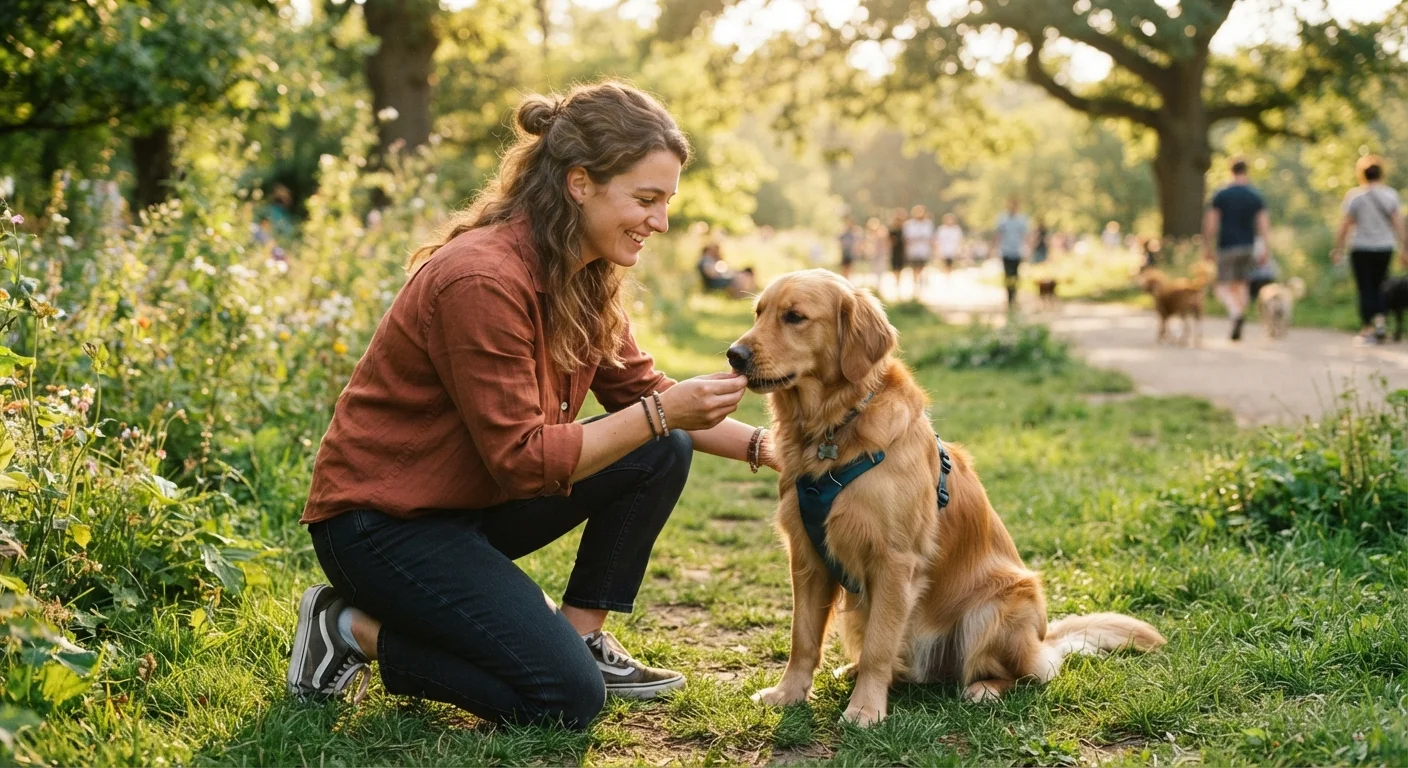
Self-directed training - using books, videos, and structured online resources to guide your own practice - has become increasingly accessible. For owners working on foundational behaviors with a dog that has no significant behavioral history, it can be genuinely effective when paired with reliable, science-backed materials. The parallels to how adults approach self-directed learning in other domains are real: motivation, consistency, and source quality all determine outcomes, as explored in self-directed learning: strengths and limitations.
The core challenge is feedback. Without an expert watching your mechanics - how you time a marker cue, how you hold a treat, how your body language reads to your dog - errors can compound quietly. Owners may inadvertently reinforce the wrong behavior or misread their dog's stress signals. Before assuming a behavior problem is the dog's fault, it is worth ruling out training technique as a variable. Common misconceptions in this space are addressed in training myths that persist despite the evidence.
Choosing the Right Format for Your Situation
A few practical questions help narrow the decision:
- Does your dog show fear, aggression, or reactivity? Start with a private trainer or a behaviorist before considering group settings.
- Is socialization with other dogs a goal? Group classes provide controlled exposure that is hard to replicate otherwise.
- What is your budget? Group classes and self-directed approaches cost significantly less over time, though private training may resolve issues faster and more durably.
- How consistent can you be between sessions? Training gains erode quickly without daily reinforcement regardless of format. Honest self-assessment here matters more than most owners expect.
Many owners find that starting with a professional - either group or private - to establish correct foundations, then maintaining skills through self-directed practice, gives the most durable results. The format is a delivery mechanism; the relationship and the daily repetitions are where learning actually happens.
This article is for general informational purposes only and does not constitute professional veterinary or animal behavior advice. For dogs with serious behavioral concerns, consult a qualified veterinary behaviorist or certified professional dog trainer.