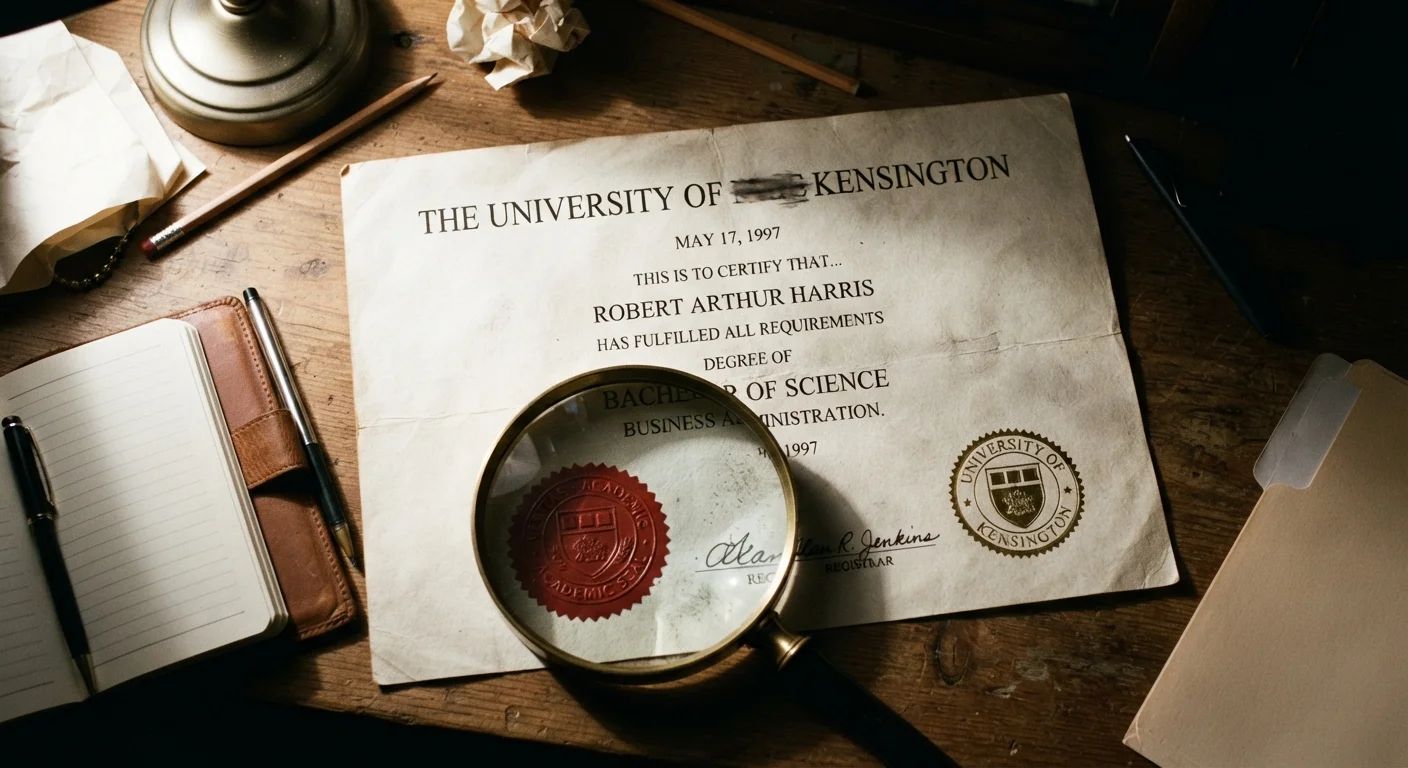


The Problem With Trusting a Name Alone
Credentials have never been easier to obtain - or easier to fake. Schools can project authority through polished websites, formal-sounding names, and impressive titles. But the name on a diploma tells you almost nothing about whether it will open doors in the real world. What actually determines a credential's practical value is whether the institution or program behind it has been independently evaluated and recognized.
This is where accreditation does its work. Without understanding it, adults risk investing thousands of dollars and hundreds of hours into qualifications that employers, licensing boards, and graduate programs simply will not accept. See our guide to spotting credential fraud for a closer look at how misleading credentials operate.
~7,500
Accredited postsecondary institutions in the U.S.
According to the U.S. Department of Education's DAPIP database, thousands of institutions hold recognized accreditation - but many more do not.
Title IV
Federal aid eligibility gating factor
Under the Higher Education Act, only students attending accredited institutions are eligible to apply for federal grants and loans administered by the Department of Education.
Varies by state
Licensing boards requiring accredited degrees
Most state-level professional licensing boards specify that applicants must hold degrees from programs with recognized specialized accreditation - requirements vary by field and jurisdiction.
How the U.S. Accreditation System Is Structured
The United States uses a voluntary, non-governmental accreditation system - but it carries real regulatory weight. Accrediting organizations themselves must be recognized by either the U.S. Department of Education, the Council for Higher Education Accreditation (CHEA), or both. Schools and programs that seek accreditation go through a rigorous peer-review process covering curriculum quality, faculty qualifications, student outcomes, and institutional resources.
There are two primary levels to understand:
- Institutional accreditation evaluates the entire college or university. Regional accreditors - such as the Higher Learning Commission or SACSCOC - cover most traditional nonprofit schools. National accreditors often cover career-oriented and vocational institutions.
- Programmatic (or specialized) accreditation evaluates a specific program within an institution - for example, a nursing school, law school, or engineering department. These are granted by field-specific bodies and may be required for professional licensing.
For a broader look at how different credential types fit into this framework, see our explainer on what certificates, diplomas, and degrees actually signal to employers.
Why Accreditation Status Has Concrete Consequences
Accreditation is not just a formality. It determines access to several critical pathways:
- Federal financial aid: Only students at accredited institutions qualify for federal grants and loans under Title IV of the Higher Education Act. Enroll in an unaccredited program and you cannot use federal aid to pay for it.
- Credit transfer: If you later want to continue your education, regionally accredited schools generally will not accept transfer credits from unaccredited institutions. Credits earned somewhere unrecognized may be treated as worthless.
- Professional licensing: Fields like nursing, teaching, engineering, and accounting require degrees from specifically accredited programs. An unaccredited credential can disqualify you from sitting for licensure exams entirely.
- Employer recognition: Many employers - especially in regulated industries and government roles - filter out applicants whose degrees come from unaccredited schools during initial screening.
Always Verify the Accreditor, Not Just the School
Some institutions claim accreditation from bodies that sound official but are not federally recognized. Before trusting any accreditation claim, look up the accrediting organization itself in the Department of Education or CHEA directories. If the accreditor is not recognized, the credential carries no protected standing - regardless of how legitimate the school appears.
Understanding these stakes up front separates a smart education investment from an expensive mistake. For more on how certifications differ from degrees in this context, see our piece on professional certifications vs. academic degrees.
How to Verify Accreditation Before You Commit
Verification takes less than ten minutes and should be a non-negotiable step before enrolling anywhere. Here is what to do:
- Search the DAPIP: The U.S. Department of Education's Database of Accredited Postsecondary Institutions and Programs is the official, authoritative source. Search by institution name and confirm the accreditor listed is federally recognized.
- Cross-reference with CHEA: The Council for Higher Education Accreditation maintains its own directory and can help you identify whether the accrediting body itself is legitimate - since fake accreditors exist too.
- Check field-specific bodies: If your program leads to a licensed profession, look up the relevant specialized accreditor (such as ABET for engineering or CCNE for nursing) and confirm your program appears in their directory.
- Be skeptical of self-claims: Any institution that prominently promotes its accreditation without providing a verifiable accreditor name is worth scrutinizing more carefully.
Before enrolling, run through a full due-diligence process with our credential research checklist for adult learners.
Accreditation is also equally important for online programs. Accreditation in online education works the same way as for campus-based study - a degree is only as strong as the recognized standing of the institution behind it.