
What Each Approach Actually Involves
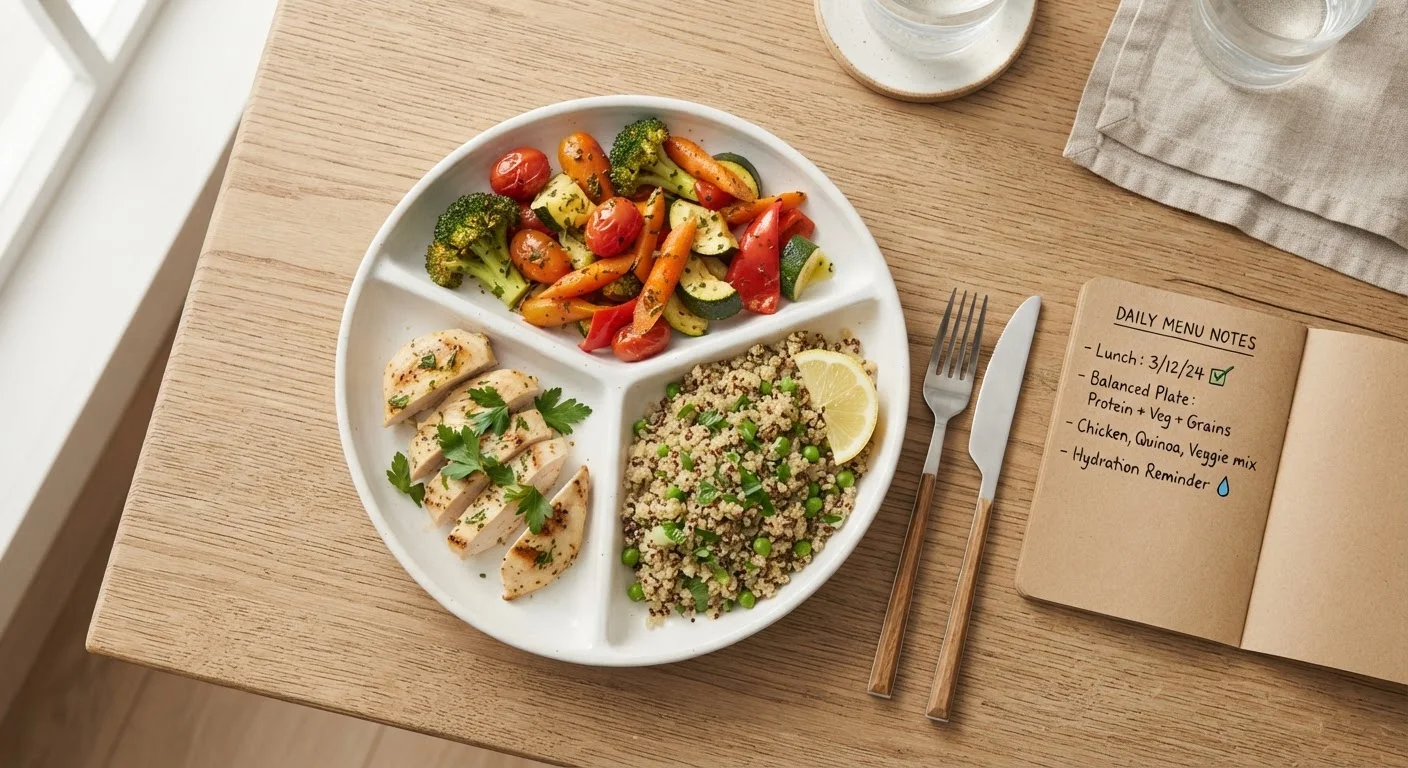
The Plate Model - often associated with tools like the USDA's MyPlate framework - asks you to think about the proportions on your plate rather than measuring anything. A common version suggests filling roughly half your plate with vegetables and fruit, one quarter with a protein source, and one quarter with whole grains or starchy vegetables. No app required; you just look at your meal and adjust accordingly.
Calorie counting, by contrast, involves tracking the estimated energy content of everything you eat, usually through a food diary, app, or label reading. The goal is to stay within a target range based on personal factors like height, weight, age, and activity level. For background on key nutrition concepts that inform both approaches, see the Daily Nutrition Habits reference guide.
Both frameworks attempt to solve the same problem - helping people eat in a way that supports wellbeing - but they operate through fundamentally different mechanisms: one is structural and visual; the other is numerical and analytic.
| Criterion | The Plate Model | Calorie Counting |
|---|---|---|
| Primary mechanism | Visual proportion guidance | Numerical energy tracking |
| Tools required | None | App, diary, or food scale |
| Daily effort level | Low - glance-based check | Moderate to high - consistent logging |
| Precision | Approximate | Higher, but still estimate-based |
| Works when eating out | Yes, adapts easily | Harder - data often unavailable |
| Learning curve | Minimal | Moderate - requires familiarity with calorie data |
| Risk of rigid thinking | Lower | Higher if numbers become stressful |
| Suits medical oversight | Less so - limited data trail | More so - documented intake records |
Practical Trade-Offs Worth Considering
The Plate Model's main strength is its simplicity. There's no learning curve, no logging fatigue, and it works reasonably well in social situations or restaurants where calorie data simply isn't available. Its limitation is imprecision - portion sizes vary, calorie density varies, and someone eating a plate of nuts and cheese using this model could still consume far more than they realise.
Calorie counting's advantage is specificity. Research consistently shows that people tend to underestimate how much they eat, sometimes significantly, and tracking can surface those blind spots. However, the method is only as accurate as the data you enter, and food databases contain meaningful errors - particularly for home-cooked meals or restaurant dishes. It also demands consistency: one or two untracked days can skew your picture considerably.
~53%
Adults who underestimate daily calorie intake
Research published in public health nutrition journals has found that self-reported calorie intake frequently underestimates actual consumption by a substantial margin.
27%
Calorie error rate in food database entries
Studies examining popular calorie-tracking apps have found average discrepancies of around 20-30% between logged and actual calorie content for restaurant and home-cooked meals.
1 in 3
US adults report tracking food intake
National health surveys suggest roughly one-third of American adults have tried some form of dietary tracking, though sustained use varies widely.
If numbers feel stressful rather than clarifying, it's worth reading about common mental patterns that derail healthy eating - calorie tracking can sometimes reinforce all-or-nothing thinking if approached rigidly. A related comparison worth exploring is mindful eating versus calorie counting, which examines yet another mechanism for changing eating habits.
Reading Labels Across Both Methods
Whichever framework you use, understanding nutrition labels adds practical value. Calorie counters rely on label data directly; Plate Model users benefit from understanding nutrient density - knowing that two foods occupying the same visual quarter of a plate may differ substantially in fibre, sodium, or protein content. Our guide on reading a nutrition label without getting lost in the numbers walks through which figures actually deserve your attention.
The bottom line: these frameworks are tools, not moral frameworks. Many people find that a hybrid approach - using plate proportions as a daily default and occasionally checking calorie data to recalibrate their sense of portions - works better than either method alone. What matters most is whether the approach you choose is sustainable, genuinely informative, and free from the kind of rigidity that makes eating feel stressful rather than nourishing.
This article provides general nutrition information for educational purposes only and is not a substitute for personalised advice from a registered dietitian or qualified healthcare professional. If you have specific dietary needs, a medical condition, or concerns about your eating habits, please consult an appropriate professional.