
Why Plant Proteins Deserve a Closer Look
Protein is essential for muscle maintenance, immune function, enzyme production, and dozens of other physiological processes. While animal products have traditionally dominated protein conversations, plant-based sources can meet protein needs effectively for many adults - provided variety is built in. For a broader grounding in how protein fits into everyday eating, see our Daily Nutrition Habits reference guide.
The practical challenge isn't finding a plant protein - it's understanding how they differ so you can make informed choices. Below, five of the most common options are examined side by side.
| Beans | Lentils | Tofu | Tempeh | Edamame | |
|---|---|---|---|---|---|
| Protein per ½ cup (cooked) | 7-9 g | 9 g | ~10 g | 15-17 g | 8-9 g |
| Complete protein | No | No | Yes | Yes | Yes |
| Fiber content | High | High | Low | Moderate | Moderate |
| Fermented / probiotic | No | No | No | Yes | No |
| Typical cost | Very low | Very low | Low-moderate | Moderate | Low-moderate |
| Shelf stability (dried/canned) | High | High | Refrigerated | Refrigerated | Frozen |
| Culinary versatility | High | High | Very high | High | Moderate |
Beans and Lentils: The Fiber-Rich Foundation
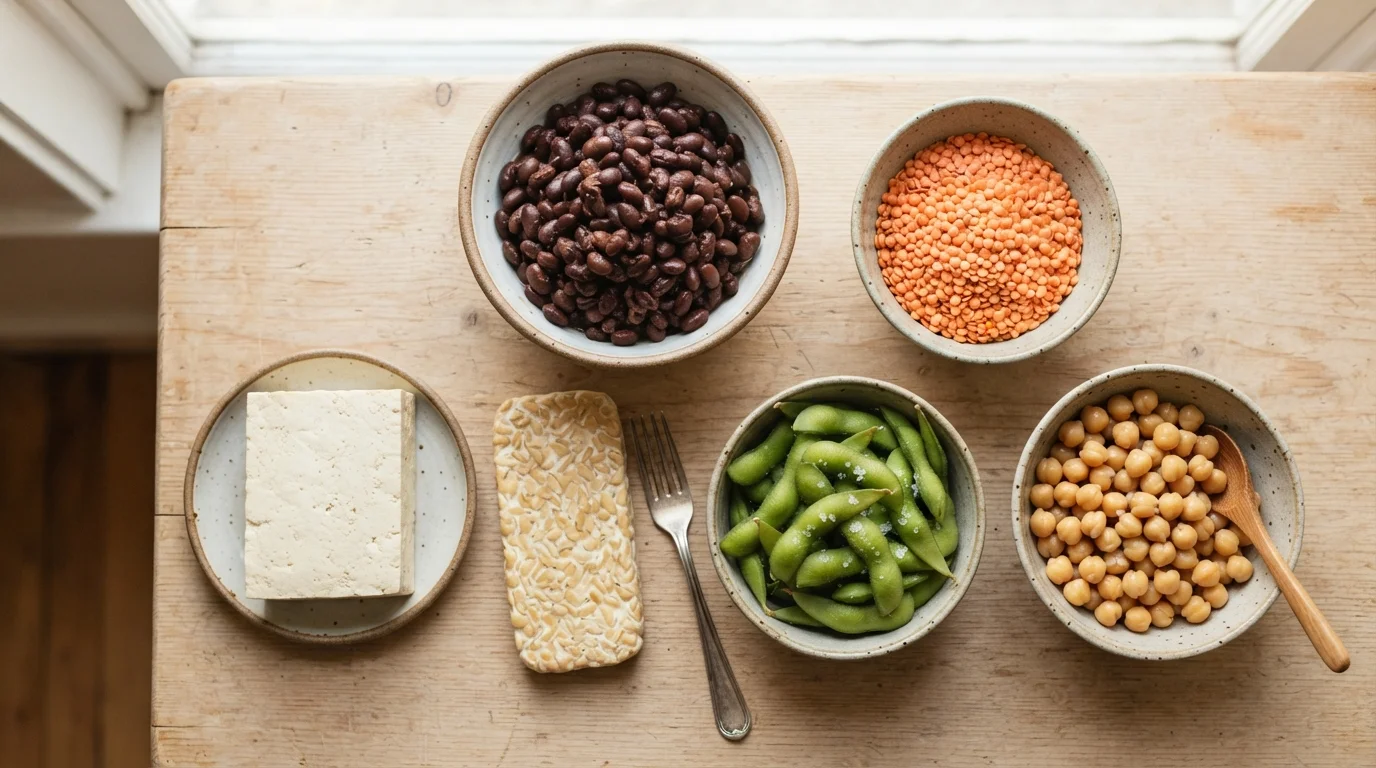
Legumes - including black beans, kidney beans, chickpeas, and lentils - are among the most widely studied plant protein sources. A cooked half-cup serving of most beans provides roughly 7-9 grams of protein alongside 6-8 grams of dietary fiber. Lentils are particularly notable: a cooked half-cup delivers around 9 grams of protein and 8 grams of fiber with minimal fat.
Legumes are low on the glycemic index and contain iron, potassium, folate, and magnesium. Their fiber content supports digestive regularity and may contribute to sustained satiety. The primary nutritional limitation is that most legumes are lower in the amino acid methionine, which is why dietary variety across the day remains important. Canned varieties are convenient but can be high in sodium - rinsing them reduces sodium content by roughly 40 percent, according to food science research.
Combining Plant Proteins Throughout the Day
Plant proteins are often described as 'incomplete' because most are low in one or more essential amino acids. However, you don't need to combine complementary proteins in the same meal - research suggests that getting a variety across the day is sufficient for healthy adults. Pairing beans with grains like rice or quinoa at different meals naturally fills amino acid gaps over time.
Tofu: The Versatile Neutral Canvas
Tofu - made from coagulated soy milk - is a complete protein, meaning it contains all nine essential amino acids in meaningful amounts. A half-cup serving of firm tofu provides approximately 10 grams of protein with moderate fat, primarily unsaturated. It is also a source of calcium (especially when set with calcium sulfate) and iron.
Because tofu absorbs surrounding flavors readily, it adapts well to a wide range of cuisines and cooking methods: stir-fried, baked, crumbled, or blended into smoothies or sauces. Silken, soft, firm, and extra-firm varieties differ mainly in water content, which affects texture and application rather than basic nutritional profile. Tofu is minimally processed compared to many protein products - a useful distinction explored further in our guide to whole foods vs. processed foods.
Tempeh: Fermented, Dense, and Nutrient-Rich
Tempeh is made by fermenting whole cooked soybeans with a mold culture, which binds the beans into a firm, sliceable cake. This process gives tempeh several advantages over other soy products. A half-cup serving contains approximately 15-17 grams of protein - among the highest of any plant source by volume - along with notable amounts of manganese, phosphorus, and B vitamins.
Fermentation also partially breaks down phytic acid, an antinutrient that can reduce mineral absorption in unfermented legumes, potentially improving the bioavailability of nutrients in tempeh. The fermentation process also introduces beneficial bacterial cultures, though whether these survive cooking is still an area of ongoing research. Tempeh has a nuttier, earthier flavor than tofu and holds its shape well in slicing or cubing, making it well-suited to grain bowls, sandwiches, and sautés.
~15-17 g
Protein per ½ cup of tempeh
Tempeh's dense soybean composition makes it one of the highest-protein plant foods by volume, according to USDA food composition data.
~40%
Sodium reduction from rinsing canned beans
Research published in food science literature has found that rinsing canned legumes under running water can cut sodium content by roughly 40 percent.
6-8 g
Fiber per ½ cup of cooked lentils
Lentils rank among the top whole-food fiber sources, supporting digestive health and long-term satiety according to established dietary guidelines.
Edamame and Other Notable Sources
Edamame (young green soybeans) is another complete protein, offering around 8-9 grams per half-cup serving when shelled and cooked, along with fiber, folate, and vitamin K. It requires minimal preparation and works as a snack, salad addition, or side dish.
Other plant proteins worth including in regular rotation include split peas (similar profile to lentils), seitan (made from wheat gluten - very high in protein but not suitable for those with celiac disease or gluten sensitivity), and hemp seeds (a complete protein with a favorable omega-3 to omega-6 ratio, useful as a topping or smoothie addition). Each brings a different amino acid emphasis, reinforcing the value of variety over reliance on a single source.
This article is for general informational and educational purposes only and is not a substitute for advice from a registered dietitian or qualified healthcare professional. Individual nutritional needs vary; consult a professional before making significant changes to your diet.