
Why Screen Time Before Bed Is More Complicated Than You Think
Most advice about screens and sleep lands on the same single villain: blue light. While that framing contains a grain of truth, it misses a large part of the picture. Research in sleep science identifies at least three distinct mechanisms through which evening screen use can undermine rest - and blue light is only one of them.
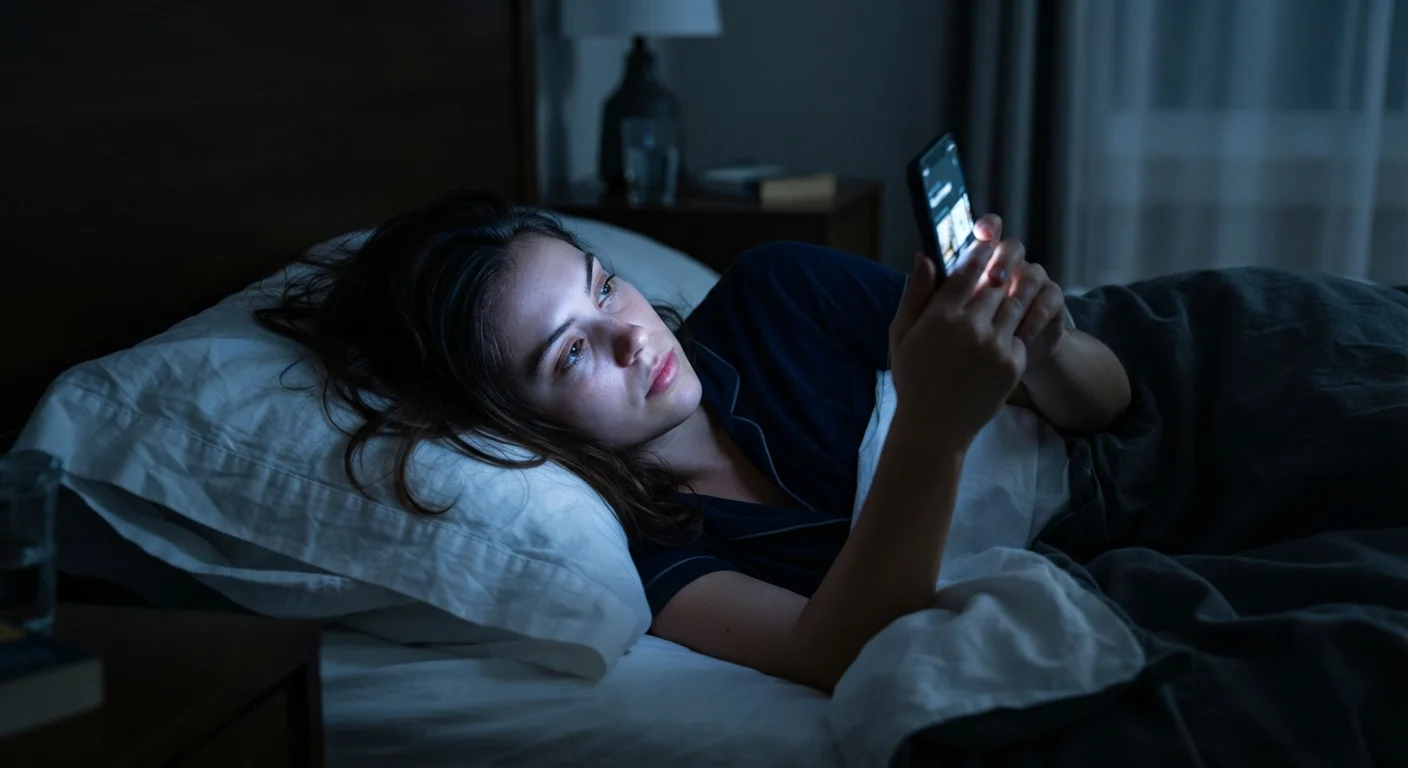
The other two - cognitive arousal (mental stimulation that keeps your brain alert) and emotional arousal (stress, excitement, or anxiety triggered by content) - may be more disruptive for many adults than photon wavelength ever is. Understanding all three helps explain why some people fall asleep fine after reading an e-book but lie awake after thirty minutes of social media, even with night mode enabled.
For a broader look at the habits that genuinely support rest, see our article on what sleep hygiene actually means.
Myth
Blue light from screens is the primary reason devices ruin your sleep.
Fact
Blue light suppresses melatonin, but cognitive and emotional arousal from screen content are equally - and often more - disruptive to sleep onset.
Laboratory studies confirm that short-wavelength (blue) light can delay melatonin release, which shifts your internal clock. However, the effect size from a typical phone screen held at normal distance is more modest than headlines suggest. A 2015 study in PNAS found measurable melatonin suppression from e-readers, but the magnitude varied considerably across individuals. More importantly, several sleep researchers note that the mental stimulation from scrolling, replying, or watching emotionally engaging content can keep the brain in a high-alert state regardless of light color - an effect night mode cannot address.
Myth
Blue-light-blocking glasses or night mode eliminates the sleep risk from evening screens.
Fact
These tools reduce one pathway of disruption but leave cognitive and emotional arousal - often the stronger factors - completely unaddressed.
Blue-light glasses and night mode features do filter some short-wavelength light, and limited research suggests modest benefits for eye comfort. But they do nothing to calm a mind that has just absorbed upsetting news, a heated comment thread, or a cliffhanger episode of a TV series. Treating these accessories as a full solution can create a false sense of security and discourage the content boundaries that matter more for most people.
Myth
Watching TV before bed is safer than using a phone because you're more passive.
Fact
Passive viewing can still generate emotional arousal, and televisions are often placed in bedrooms, which conditions the brain to associate that space with wakefulness.
The interactivity of a phone adds a layer of cognitive demand, but passively watching a thriller, a tense drama, or breaking news produces its own cortisol response. Sleep medicine guidance consistently recommends reserving the bedroom for sleep and intimacy only - a principle that applies to televisions as much as smartphones. The physical distance from a TV screen does reduce light exposure somewhat, but content-driven arousal remains the dominant concern.
Myth
One hour of screen-free time before bed is a magic threshold that fixes sleep problems.
Fact
While limiting screens in the hour before bed is a reasonable starting point, sleep quality is shaped by many interacting factors, and the right wind-down window varies by individual.
The one-hour recommendation appears in many guidelines and has some research support, but it is a population-level heuristic - not a precise prescription. Highly stress-reactive individuals may need more time to return to a calm baseline; others may find that calm, low-stimulation screen use (such as reading fiction on an e-reader at low brightness) causes minimal disruption even closer to bedtime. Experimenting with both the duration and the type of activity is more useful than rigidly applying any single number.
Myth
Children's screen-sleep research applies directly to adults.
Fact
Adults and children have different circadian sensitivities, and findings from pediatric studies should not be automatically extrapolated to adult sleep health.
Much of the most alarming screen-and-sleep research involves children and adolescents, whose developing circadian systems are measurably more sensitive to light and stimulation. Adult studies generally find real but smaller effects. This doesn't mean adults are unaffected - it means the advice calibrated for a 12-year-old may overstate the risk for a 40-year-old, and adults should seek out evidence specific to their age group when making decisions about their own routines.
Common Myths - and What the Evidence Actually Shows
The myths below are among the most widely repeated in popular wellness coverage. Each one contains a partial truth, which is precisely why they persist. Correcting them doesn't mean screens are harmless before bed - it means understanding the real risks so you can make practical, realistic changes.
~30 min
Average melatonin delay from evening device use
Research cited in sleep medicine literature suggests evening light exposure from screens can delay melatonin onset by approximately 30 minutes on average, though individual variation is substantial.
1 in 3
US adults not getting recommended sleep
The CDC has reported that roughly one-third of US adults regularly sleep less than the recommended seven hours per night, citing behavioral and environmental factors as key contributors.
45-60 min
Suggested pre-sleep wind-down window
Sleep hygiene guidance from organizations such as the American Academy of Sleep Medicine generally recommends a calming, low-stimulation routine in the 45-60 minutes before bedtime.
Once you've reviewed the evidence, the Evening Wind-Down Checklist can help you put these insights into a concrete routine. And if you're deciding whether mornings or evenings are your best time for anchor habits, the comparison in Morning Routine vs. Evening Routine is worth reading alongside this article.
Practical Steps Worth Taking
Evidence supports a few realistic strategies that address all three arousal pathways - not just blue light:
- Set a content boundary, not just a device boundary. Switching from news and social feeds to a calm podcast, e-reader, or passive video roughly 45-60 minutes before bed addresses both cognitive and emotional arousal.
- Dim screen brightness manually. Automatic night mode shifts color temperature but doesn't always reduce overall luminance. Lower brightness is a more direct intervention.
- Keep devices out of arm's reach. Physical distance reduces the reflex to check notifications, which is a potent source of intermittent arousal throughout the night.
- Anchor your cutoff to a consistent clock time. Research on circadian rhythms consistently shows that regularity - not perfection on any single night - is the strongest predictor of sleep quality over time. See what a consistent sleep schedule does to your body for more on this mechanism.
This article is for general informational purposes only and is not a substitute for professional medical advice. If you experience persistent sleep difficulties, consult a qualified healthcare provider.