

Why an Evening Routine Matters for Sleep
Sleep isn't a switch you flip at bedtime - it's a process that begins well before your head hits the pillow. Research consistently links pre-sleep behaviors to both how quickly people fall asleep and the depth of rest they get. Yet for many adults, the hour before bed is filled with the same stimulating activities that defined the rest of the day: scrolling, inbox-checking, and streaming.
This checklist is designed as a practical self-audit. Work through it each evening to identify which habits may be working against your rest and which simple shifts can gradually build a routine that sticks. It draws on well-established sleep hygiene principles - a set of behavioral and environmental practices with broad support from sleep researchers and health organizations.
If you're also working on daytime stress, pairing this checklist with a broader approach to daily stress management can strengthen both your daytime resilience and your nighttime recovery. For a broader look at when to anchor your key habits, see morning vs. evening routine research.
This article provides general health information and education only. It is not medical advice. If you have ongoing sleep difficulties, speak with a qualified healthcare professional.
Persistent Sleep Problems Need Professional Assessment
This checklist addresses common, everyday sleep hygiene habits. It is not intended to address insomnia disorder, sleep apnea, restless legs syndrome, or other clinical sleep conditions. If you regularly struggle to fall asleep, stay asleep, or feel unrefreshed despite consistent effort, please consult a qualified healthcare professional. Untreated sleep disorders can have significant health consequences.
What You'll Need
This checklist requires no special equipment. A few low-cost items can support the process, but none are mandatory.
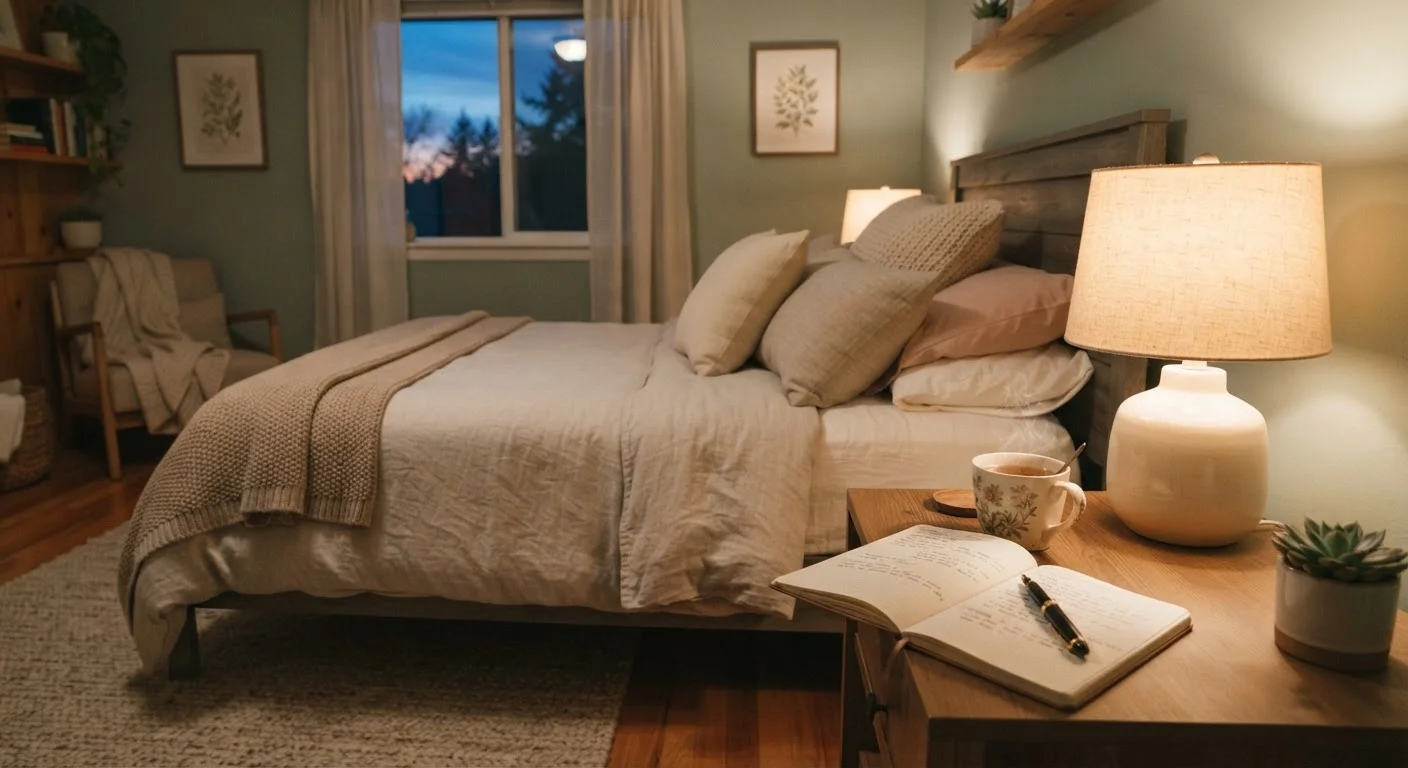
Dim lamp or bedside light
Provides warm, low-intensity lighting to use instead of overhead lights during wind-down.
Paper notebook and pen
Used for a nightly worry-dump or brief journaling to clear mental clutter before sleep.
Blue-light filter app or device setting
Reduces alerting blue-spectrum light from screens if devices are used in the evening.
White-noise machine or fan
Masks disruptive ambient sounds that may interfere with falling or staying asleep.
Sleep mask or blackout curtains
Blocks external light sources that can suppress melatonin production.
Your Evening Wind-Down Checklist
Work through the groups below starting roughly 60-90 minutes before your intended sleep time. Items marked must reflect widely supported sleep hygiene practices. Items marked should are strongly recommended but allow for individual variation. Nice-to-have items are optional enhancements worth trying.
Environment Setup
Screen & Stimulation Limits
Body & Nutrition
Mental Decompression
Consistency Anchors
Supplements and Sleep Aids: Proceed with Caution
Over-the-counter sleep aids and supplements - including melatonin - are widely marketed but are not substitutes for consistent sleep hygiene habits. Their appropriate use, dosage, and suitability vary significantly by individual. Always consult a healthcare professional before starting any supplement or sleep aid, especially if you take other medications or have an existing health condition.
Building consistency across these habits takes time. Most sleep researchers suggest that meaningful changes to sleep patterns require at least two to three weeks of repeated practice before results feel stable. Be patient with the process and adjust where needed.
For a complementary habit to layer in during the day, the daily movement checklist for desk-bound adults can help reduce the physical tension that often builds overnight. You can also explore more routines in our Everyday Habits hub.