

Why These Myths Persist
Online education has existed in recognizable form for over two decades, yet a cluster of stubborn misconceptions continues to shape how adults evaluate it. Some myths originate from the early days of distance learning, when quality controls were inconsistent and employer familiarity was limited. Others reflect genuine concerns that applied at one point but have since been overtaken by evidence.
Understanding where these beliefs come from - and what the current evidence actually shows - matters practically. A learner who dismisses online credentials as worthless may pass on a program that would genuinely advance their career. One who assumes online coursework is easy may enroll underprepared and drop out. Getting the facts right is a prerequisite to making a sound decision about your time and money.
The myth-fact pairs below address the most commonly repeated claims. For a broader look at what online formats do well and where real limitations remain, see What Online Learning Does Well-and Where It Still Falls Short.
Myth
Employers don't take online degrees seriously - they can tell the difference and it counts against you.
Fact
Employer attitudes have shifted substantially; most hiring managers today report that an accredited online degree is viewed comparably to a campus-based one from the same institution.
This myth was more grounded in reality fifteen years ago, when online programs were less common and quality varied enormously. Today, many well-established universities offer their degree programs entirely online - often using the same faculty, curriculum, and assessment standards as their on-campus versions. Research from reputable workforce organizations has consistently found that the institutional reputation and accreditation status of a degree matter far more to most employers than the delivery method. That said, employer perceptions do vary by industry and role - some highly competitive fields or specific employers may still scrutinize format. The safest approach is to research norms in your target sector and to verify that any program you consider holds recognized accreditation. See how employers and graduate schools view online degrees for a fuller picture.
Myth
Online courses are easier than in-person ones - you can coast through without really trying.
Fact
Accredited online courses are generally held to the same academic standards as their in-person equivalents, and many learners find them more demanding because of the self-discipline required.
The absence of a physical classroom removes the scheduling structure that many learners rely on to stay on track. Without fixed class times, mandatory attendance, and immediate peer accountability, online students must supply their own motivation consistently. Assignments, exams, and grading rubrics in accredited programs typically mirror those used in campus sections. Some evidence suggests that online learners who succeed invest more hours per credit than their on-campus counterparts, partly because they must decode material independently rather than having concepts clarified in real time. The perception of ease often reflects low-stakes, non-credit courses or platforms with no formal assessment - not the reality of credit-bearing academic programs.
Myth
Online learning is isolating - you study alone and have no real interaction with instructors or peers.
Fact
Most structured online programs build in substantial interaction through discussion boards, video sessions, group projects, and direct instructor feedback.
The image of a student silently watching pre-recorded videos with no human contact describes one narrow type of online course - typically self-paced, non-credit offerings. Accredited degree programs and many professional certificate courses are designed with deliberate interaction in mind. Discussion forums require substantive participation; group assignments replicate collaborative work; live office hours and synchronous seminars are common. The quality of interaction differs from a face-to-face seminar in ways that are real and worth acknowledging - spontaneous hallway conversations and in-person study groups don't have direct equivalents - but structured programs actively address isolation as a design problem, not an unavoidable feature.
Myth
High dropout rates prove that online learning doesn't work for most people.
Fact
Completion rates vary enormously depending on program type, learner support, and course design - aggregate dropout statistics obscure more than they reveal.
It is accurate that some categories of online courses - particularly free, open-enrollment, self-paced MOOCs (Massive Open Online Courses) - see completion rates well below 20%. But these numbers include millions of people who enrolled out of casual curiosity, never intended to complete the material, or sampled a module and left satisfied. When researchers focus on structured, for-credit programs with enrolled, tuition-paying students, completion rates look quite different. Institutional support systems, peer cohorts, financial commitment, and clear academic stakes all improve outcomes. The dropout rate question is better framed as: which online formats, for which learners, under what conditions? Understanding the common traps in advance meaningfully reduces risk - see why learners abandon online courses.
Myth
You can learn anything just as effectively online as in person.
Fact
Some subjects and skill types translate well to online delivery; others - particularly those requiring hands-on practice, laboratory work, or clinical supervision - face genuine limitations online.
This myth often emerges as an overcorrection to unfair skepticism about online learning. The balanced reality is that disciplines relying heavily on conceptual understanding, writing, analysis, and asynchronous collaboration (computer science, business, data analysis, many humanities) have demonstrated strong outcomes in online environments. Fields requiring physical manipulation of materials, real-time patient or client interaction, or direct supervision - nursing clinical hours, surgical technique, studio arts - cannot be fully replicated online and typically require hybrid or in-person components by design. Acknowledging these limits is not a criticism of online education; it is an honest guide to where it works best. Subject areas where online learning has proven particularly effective reviews the evidence by discipline.
What to Verify Before You Enroll
Correcting myths is useful only if it informs action. Before committing to any online program, a few specific checks can protect you from poor investments of time and money.
Accreditation Is Non-Negotiable
No other factor matters as much as whether the institution or program holds recognized accreditation. An online degree from an unaccredited provider may not be accepted by employers, graduate schools, or professional licensing bodies - regardless of the quality of learning you experienced. Always verify accreditation through official national databases before enrolling, not through the institution's own marketing materials.
Accreditation is the single most consequential factor. A credential from a regionally or nationally accredited institution carries weight with most employers and can transfer to further education. A credential from an unaccredited provider may have no recognized standing at all. See our detailed guide on accreditation in online education before enrolling anywhere.
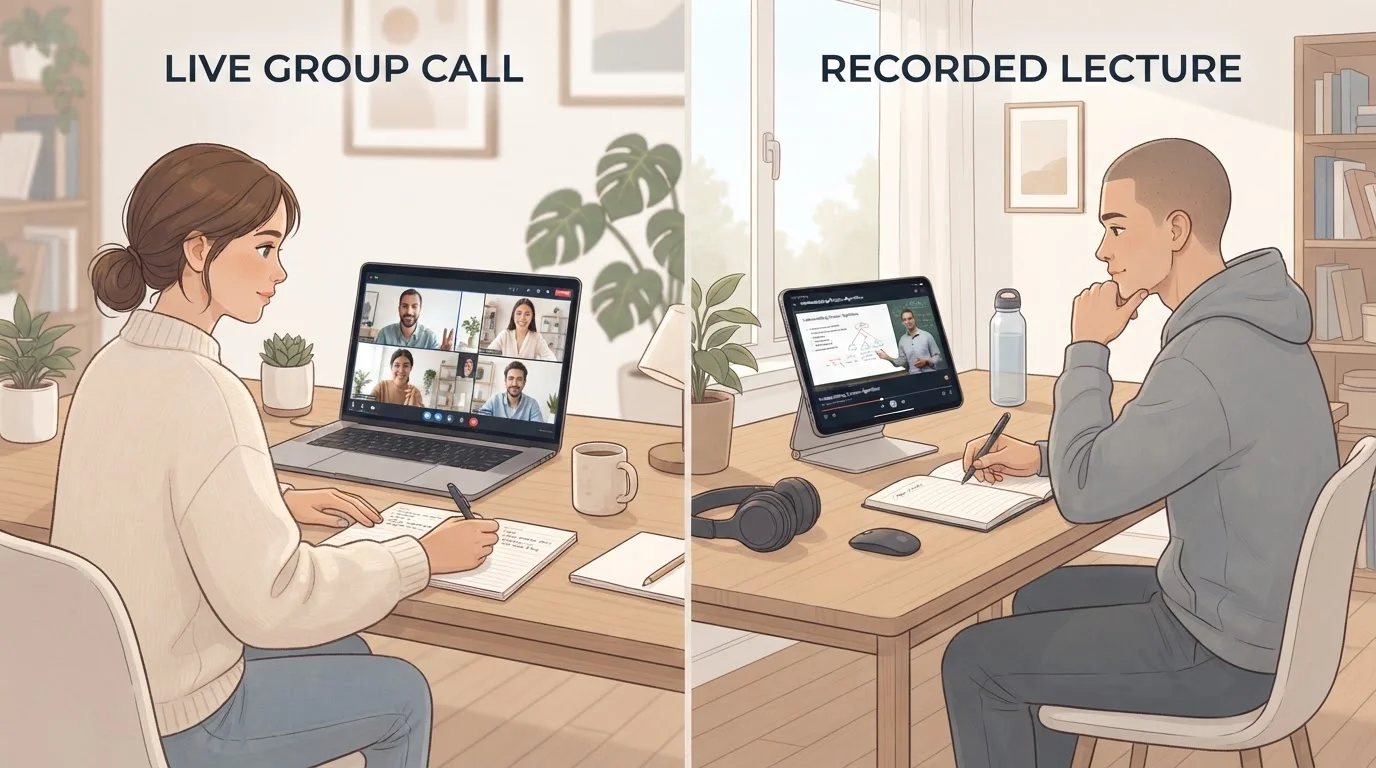
Delivery format is a separate decision from accreditation. Some programs offer synchronous sessions (live, scheduled class time) while others are fully asynchronous (self-paced video and assignments). Neither is inherently superior, but one may fit your schedule and learning style better. Synchronous vs. Asynchronous Online Learning explains the trade-offs clearly.
Also factor in the full financial picture. Tuition is rarely the only cost. The Hidden Costs of Earning a Degree That Nobody Talks About covers fees, materials, and opportunity costs that prospective students commonly overlook. And if you want to think systematically about whether a program is likely to pay off, Evaluating a Degree Programme's Return on Investment offers a grounded framework for reading graduate earnings data critically.
Finally, if completion is a concern - and it should be - read The Real Reasons Most People Abandon Online Courses Halfway Through before you start. Knowing the structural and motivational traps in advance gives you a meaningful edge.