

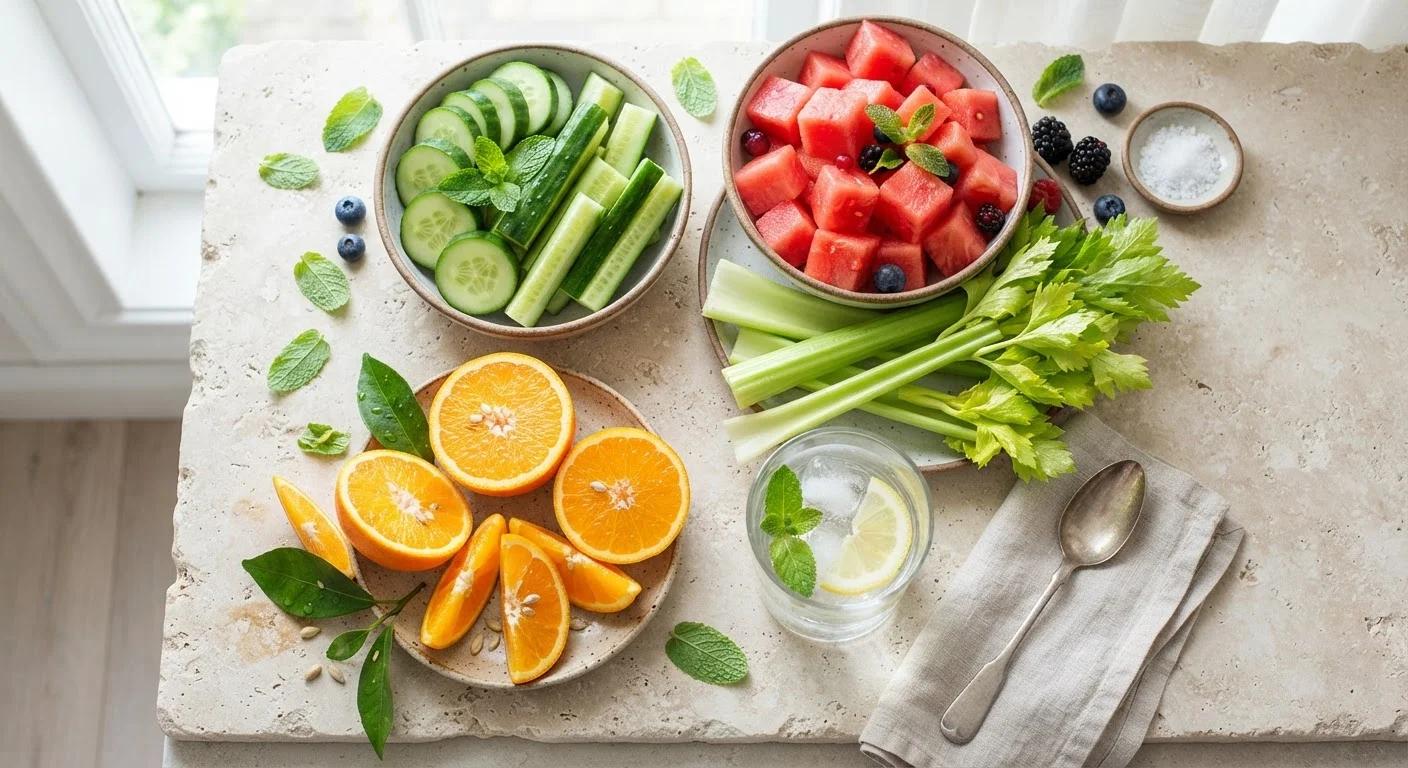
Food as a Source of Fluid
Most adults think of hydration as a drinking problem - not enough water in the glass. But research consistently shows that the foods on your plate play a meaningful supporting role. According to general nutritional science, food accounts for roughly 20% of total daily fluid intake for many adults, though this varies significantly based on diet quality and food choices.
Water-rich whole foods - particularly raw fruits and vegetables - deliver fluids alongside vitamins, minerals, and fiber. Cucumbers and iceberg lettuce are composed of more than 95% water by weight. Watermelon, strawberries, celery, and tomatoes are all similarly water-dense. These foods hydrate incrementally throughout the day, supplementing what you drink.
Cooked foods can also contribute, though cooking typically reduces water content. Oatmeal prepared with water, soups and broths, and stewed vegetables are examples of foods that retain substantial fluid and can contribute meaningfully to overall intake - especially useful in cold months when people tend to drink less.
Foods That Increase Your Fluid Demand
Just as some foods support hydration, others increase the body's demand for water. Understanding both sides helps you make more informed everyday choices.
~20%
Daily fluid intake from food
Nutritional science estimates suggest food contributes roughly 20% of total daily fluid intake for many adults following a typical diet.
95%+
Water content in cucumbers
Cucumbers, along with lettuce and celery, are among the most water-dense whole foods, making them particularly effective hydration supporters.
1-1.5L
Estimated fluid from food daily
General nutritional guidance suggests that food can provide roughly 1 to 1.5 liters of fluid per day, varying widely with diet composition.
High-sodium foods are among the most common fluid-demand drivers. When you consume excess sodium, your kidneys work to flush it out through urine, which increases water loss. Processed snacks, cured meats, canned soups, and fast food tend to be high in sodium - not because they're inherently harmful in moderation, but because frequent high-sodium eating patterns raise your baseline water needs.
High-sugar foods and beverages can have a similar effect. Sugary drinks in particular can contribute to a cycle where blood sugar spikes trigger thirst, but the beverage itself doesn't fully rehydrate because it lacks the electrolyte balance of plain water. Eating patterns heavy in refined carbohydrates and added sugars may make it harder to maintain steady fluid balance throughout the day.
High-protein diets also modestly increase hydration needs. The kidneys require more water to process and excrete the byproducts of protein metabolism - particularly urea. This doesn't mean protein is harmful, but it does mean that people significantly increasing protein intake should pay proportional attention to fluid intake as well.
Electrolytes: The Hidden Hydration Factor
Fluid balance isn't just about water volume - it's about what's dissolved in that water. Electrolytes, including sodium, potassium, magnesium, and chloride, govern how water moves across cell membranes and how effectively your body retains the fluids it takes in.
Balance Potassium and Sodium Daily
Rather than focusing only on drinking more water, consider whether your diet provides adequate potassium-rich foods to balance sodium intake. Including foods like bananas, sweet potatoes, or cooked spinach regularly helps support your body's natural fluid regulation - no supplements required for most healthy adults.
Potassium, found in bananas, sweet potatoes, leafy greens, and legumes, works in tandem with sodium to regulate fluid in and around cells. Diets low in potassium but high in sodium can create an imbalance that compromises fluid regulation. Magnesium, present in nuts, seeds, and whole grains, also plays a supporting role in cellular hydration.
This is why plain water isn't always the complete answer after heavy exercise or illness involving vomiting or diarrhea - the body has lost not just fluid but electrolytes. In these situations, eating foods that restore that balance matters as much as drinking water. For most healthy adults in typical daily activity, a balanced diet provides sufficient electrolytes without the need for specialized drinks or supplements.
For more on how common hydration beliefs hold up to science, see Hydration Myths That Keep Adults Drinking the Wrong Amount.
Recognizing Signs of Fluid Imbalance
Fluid imbalance exists on a spectrum, and the early signs are often subtle enough to be mistaken for other problems. Dark yellow or amber-colored urine is one of the most reliable everyday indicators that your fluid intake may be too low relative to your needs. Pale yellow urine generally suggests adequate hydration for most people.
Other early signs include dry mouth, headache, difficulty concentrating, and unexpected fatigue. These symptoms can have multiple causes, so they shouldn't be used to self-diagnose - but in context, they're worth paying attention to. Factors like hot weather, physical activity, illness, or medications can all shift your fluid needs significantly.
Overhydration - consuming far more water than the kidneys can process - is less common but does occur, particularly among endurance athletes. It can dilute blood sodium levels to a dangerous degree, a condition called hyponatremia. This is another reason electrolyte balance matters, not just fluid volume.
This article is for general informational purposes only and does not constitute medical advice. If you experience persistent symptoms of dehydration or other health concerns, please consult a qualified healthcare professional.