

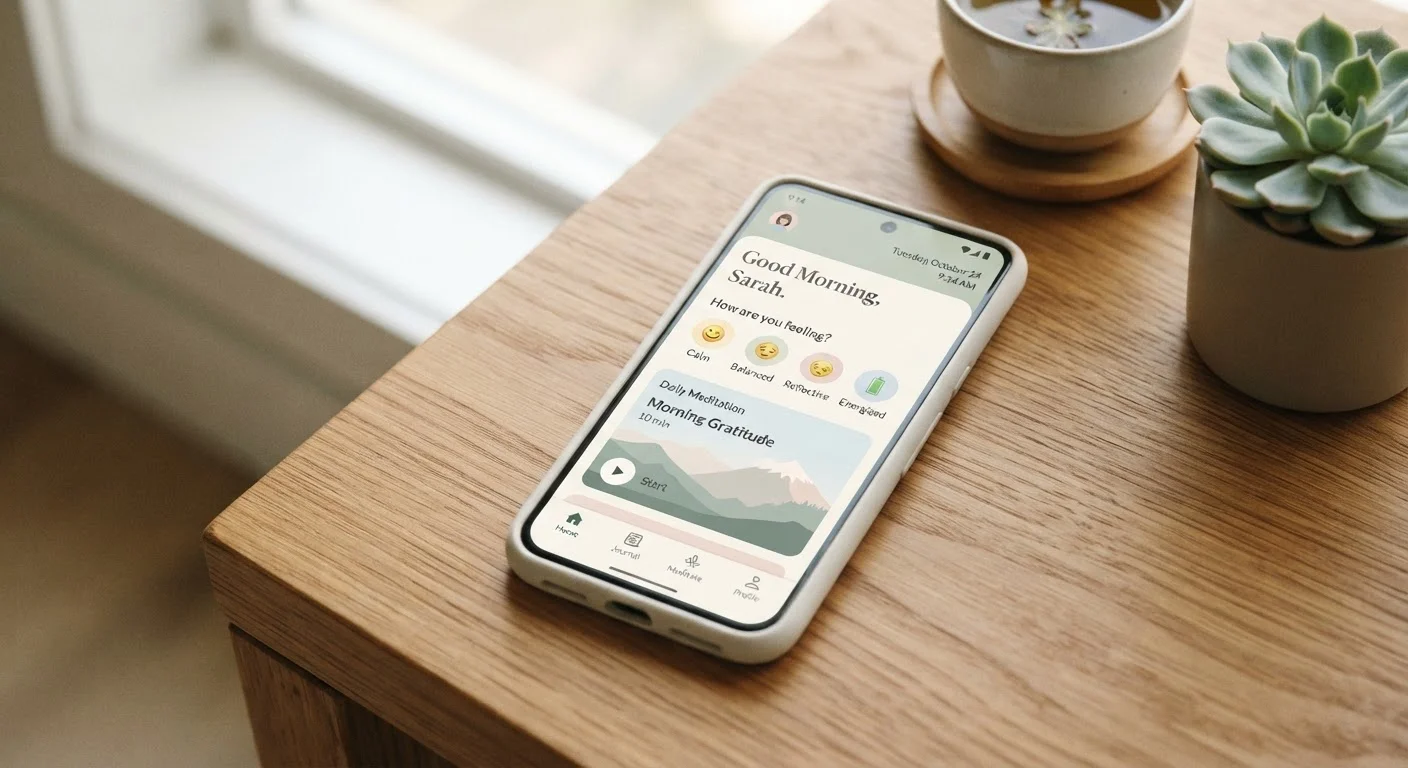
What Mental Wellness Apps Actually Are
Mental wellness apps are smartphone or tablet-based platforms designed to support emotional health through features like guided meditation, mood tracking, cognitive behavioural therapy (CBT) exercises, breathing tools, and journalling prompts. They sit in a broad category that ranges from evidence-informed programs developed with clinical input to consumer-facing apps built primarily around engagement and aesthetics.
Understanding this range matters. Not all apps are created equal, and the label "mental wellness" carries no regulatory standard in the United States. As you explore whether these tools fit into your routine, it helps to know what you're working with. For a broader foundation, see our starting guide to adult mental wellness.
This article is for general informational purposes only and does not constitute medical or mental health advice. If you are experiencing significant distress or a mental health condition, please consult a qualified healthcare professional.
The Real Advantages
For many adults, the most compelling argument for wellness apps is simple: they remove barriers. Traditional therapy involves scheduling, travel, cost, and sometimes long wait times. Apps, by contrast, are available at 3 a.m. during an anxious night or during a five-minute break at work.
Available anytime, anywhere without an appointment
Apps provide immediate access to coping tools during stressful moments, eliminating the scheduling friction that can delay traditional support.
Lower cost than traditional therapy
Many apps offer free tiers or low monthly fees, making structured mental health techniques more accessible to adults with limited budgets or no mental health insurance coverage.
Builds familiarity with evidence-based techniques
Quality apps teach skills drawn from CBT, mindfulness, and behavioural activation - techniques also used in professional therapy - which can build useful self-awareness over time.
Reduces stigma as an entry point
For adults who feel hesitant about formal therapy, an app can be a low-stakes starting point that normalises paying attention to mental health.
Mood tracking supports pattern recognition
Regular logging of mood, sleep, and stress can help users identify triggers and trends that they might otherwise miss, providing useful information to share with a clinician.
Research does support benefits for specific use cases. Studies examining app-based CBT and mindfulness programs have found meaningful short-term reductions in self-reported stress and mild anxiety symptoms for some users - though results vary by individual and app design. Tools that teach structured techniques, such as breathing exercises or thought-record prompts, can genuinely build skills over time when used consistently. These complement the kind of reflection practices that support mental well-being more broadly.
The Genuine Limitations
The convenience of apps comes with trade-offs that deserve honest attention. The most significant is clinical scope: most apps are not appropriate for managing diagnosed conditions such as major depression, PTSD, bipolar disorder, or eating disorders. Using an app in place of professional care for these conditions carries real risk.
Not clinically appropriate for serious conditions
Apps are generally designed for general wellness, not treatment. Using them as a substitute for professional care in cases of clinical depression, trauma, or crisis is not appropriate and may delay necessary help.
Clinical evidence is uneven across the market
Many apps claim wellness benefits without peer-reviewed studies to back them up. The presence of a clinical advisory board on a marketing page does not guarantee that the app's specific program has been rigorously tested.
Significant data privacy concerns
Mental health data is sensitive, and app privacy policies vary widely. Some platforms share or sell usage data to third parties, which users may not fully understand when signing up.
Engagement tends to drop off quickly
Research on digital health tools consistently finds that user engagement declines sharply after the first few weeks, limiting the real-world benefit for many people who try them.
Cannot replicate the therapeutic relationship
The human connection between a client and a trained therapist is itself a clinically meaningful component of mental health treatment - something no app can meaningfully substitute.
May create false sense of sufficient care
Regularly using a wellness app can give users the feeling they are addressing their mental health, even when their needs require more structured professional support.
There is also the question of what sustains long-term well-being. Short-term mood lifts from guided sessions don't automatically translate into durable resilience. Research on sustainable mental wellness practices consistently points to factors - therapeutic relationships, social connection, consistent physical activity - that apps struggle to replicate.
When to Prioritise Professional Support
Mental wellness apps are not designed for crisis situations or clinical mental health conditions. If you are experiencing persistent low mood, thoughts of self-harm, or symptoms that significantly interfere with daily functioning, please reach out to a licensed mental health professional or contact a crisis line. Apps are a supplementary tool, not a safety net for serious distress.
Fitting Apps Into a Realistic Mental Health Strategy
The most evidence-aligned approach treats apps as a complement to - not a replacement for - other wellness strategies. For someone already working with a therapist, an app can reinforce skills between sessions. For someone managing mild everyday stress, an app may offer a structured starting point before or instead of formal support.
~10,000+
Mental health apps available in major app stores
Estimates from researchers and health technology analysts suggest thousands of mental health and wellness apps are commercially available, with clinical validation existing for only a small fraction.
~50%
Users who stop engaging within 2 weeks
Digital health engagement studies have consistently found that a large proportion of users discontinue regular use of wellness apps within the first two weeks of download.
It's also worth auditing your broader habits. Apps won't undo the cumulative effect of patterns that chip away at mood - things like chronic sleep disruption, social comparison scrolling, or skipped breaks. Our overview of everyday habits that undermine mental well-being is a useful companion read. Before committing to a paid subscription, review the app's privacy policy carefully and look for published evidence of clinical validation - not just marketing claims.