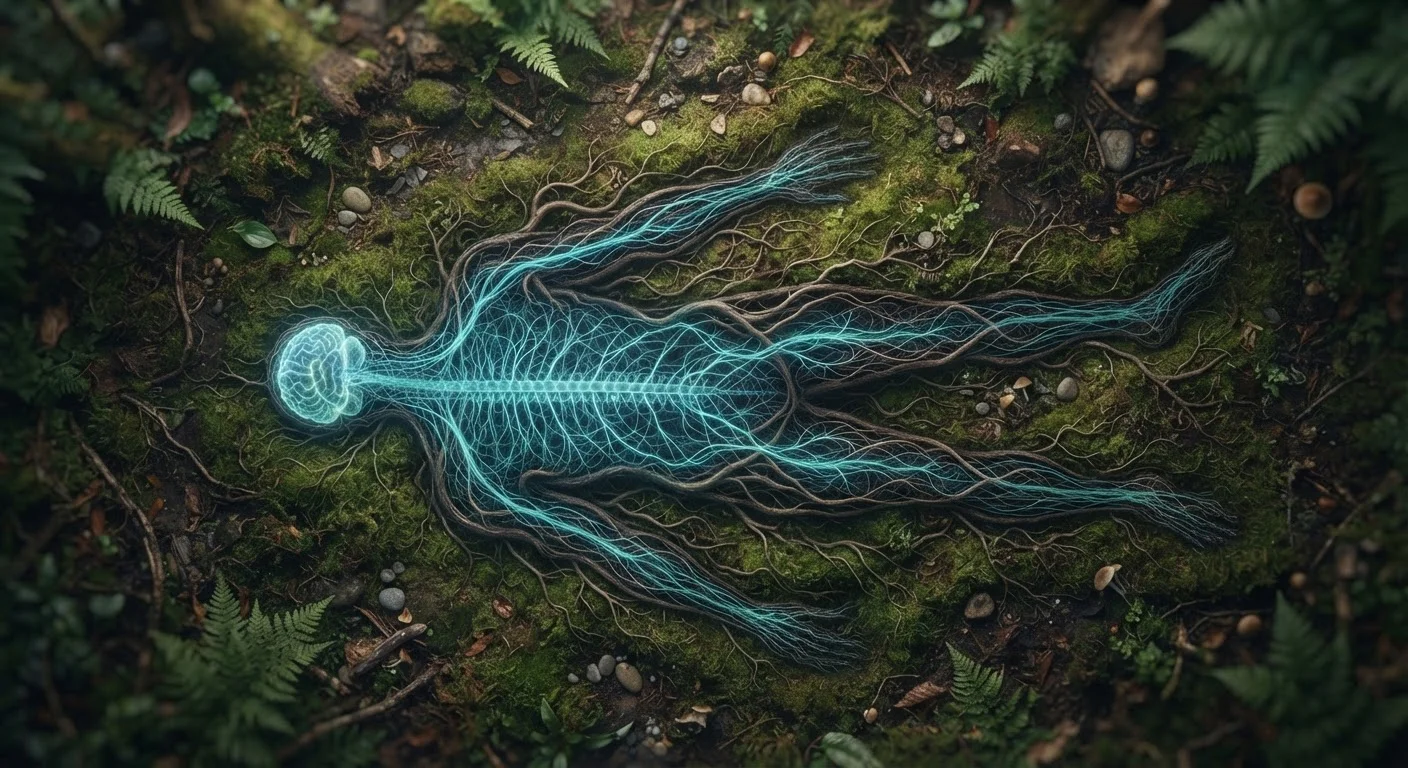


Your Body Is Designed to React to Stress
The physical sensations that accompany stress - a pounding heart, a knotted stomach, shoulders that creep toward your ears - are not random. They are the predictable output of a biological system that evolved to keep you alive. Understanding that system demystifies why stress feels so unmistakably physical.
At the center of this system is the autonomic nervous system, specifically its sympathetic branch. When the brain's threat-detection center (the amygdala) registers danger, it sends a rapid signal that prompts the adrenal glands to release adrenaline and noradrenaline within seconds. This is the well-known "fight-or-flight" activation. Heart rate climbs, blood vessels in the extremities constrict, muscles receive a surge of oxygenated blood, and digestion slows. Every one of these changes has a physical correlate you can feel.
For a deeper look at how these hormones accumulate over time, see our article on how chronic stress leaves measurable traces on the body.
77%
Adults reporting physical stress symptoms
According to the American Psychological Association's Stress in America survey, a large majority of U.S. adults report experiencing physical symptoms they associate with stress.
~30 seconds
Time for adrenaline to reach peak effect
Physiological research indicates that the initial adrenaline surge of the fight-or-flight response can produce detectable cardiovascular changes within seconds of threat perception.
50-80%
Primary care visits with a stress-related component
Health authorities and researchers have long cited estimates suggesting that a substantial proportion of primary care visits involve conditions exacerbated or influenced by stress.
The Brain Cannot Tell Real from Imagined Threats
One of the most important - and underappreciated - facts about the stress response is that the brain activates it based on perceived threat, not confirmed danger. A looming work deadline, a difficult conversation you're dreading, or even a vivid worry can trigger the same cascade as a genuinely dangerous situation.
This happens because the amygdala processes emotional input rapidly, often before the prefrontal cortex (the brain's rational center) has a chance to evaluate the situation fully. By the time you consciously decide that a stressor isn't life-threatening, your body has already begun the physiological response.
This is not a design flaw - it's a feature that prioritizes speed over precision. But it does explain why mental stress reliably produces physical symptoms, and why simply knowing you "shouldn't" be stressed rarely makes those sensations disappear. Understanding this is a first step toward working with your nervous system rather than against it. Our reference guide on stress, anxiety, and burnout can help clarify how these states overlap and differ.
“The body keeps the score. Stress is not merely a psychological experience - it is inscribed in physiological systems that regulate everything from immunity to digestion to sleep.”
— Bessel van der Kolk, Psychiatrist and researcher specializing in trauma and the body's stress response
What Chronic Low-Level Stress Does to the Body
Acute stress resolves. Chronic stress - the kind that hums in the background across weeks or months - does not give the body adequate recovery time. The second arm of the stress response, the hypothalamic-pituitary-adrenal (HPA) axis, sustains elevated cortisol levels when stressors persist. Over time, this has measurable downstream effects.
- Muscle tension: Sustained muscle contraction, especially in the neck, shoulders, and jaw, is a common chronic stress symptom that can progress to headaches or pain.
- Digestive disruption: The gut-brain axis - the bidirectional communication pathway between the digestive system and the brain - is highly sensitive to cortisol, contributing to symptoms like nausea, bloating, and altered bowel habits.
- Immune modulation: Prolonged cortisol elevation can suppress certain immune functions while promoting low-grade inflammation, a state associated with a range of health concerns.
- Sleep disruption: Cortisol naturally peaks in the morning, but chronic stress can dysregulate this rhythm, making it harder to fall or stay asleep.
These are not fringe claims - they reflect well-established pathways documented in mainstream medical literature. For a broader perspective on how physical and mental systems interact, see our piece on the mind-body connection in mental health.
This article is for general informational purposes only and is not a substitute for professional medical advice, diagnosis, or treatment. If you are experiencing persistent or distressing physical symptoms, please consult a qualified healthcare provider.
Using This Knowledge to Support Your Health
Recognizing that your physical symptoms have a biological origin shifts stress from something mysterious and alarming into something you can engage with more strategically. When you notice a tight chest or a churning stomach during a difficult week, you are observing your nervous system doing exactly what it was built to do.
Interventions that calm the autonomic nervous system - slow, controlled breathing; moderate physical activity; consistent sleep schedules - work precisely because they signal safety to the brain and help downregulate the HPA axis. These are not placebo effects; they have documented physiological mechanisms.
Try Slow Breathing to Activate Recovery Mode
Extending your exhale to be longer than your inhale - such as breathing in for four counts and out for six - activates the parasympathetic nervous system, which counteracts the fight-or-flight response. Even a few minutes of this practice has been shown to reduce heart rate and lower subjective stress. It works because breath rate is one of the few autonomic functions you can consciously control.
If you are looking to build sustainable habits around this understanding, our guide on building a daily stress management routine offers a practical, low-barrier framework for getting started.